Showing posts with label Leinster House. Show all posts

Monday, June 13, 2011

Social Welfare – The Real Fraud

Below is the first in a series of articles relating to social welfare within the twenty six counties. Amongst the specific issues dealt with will be cutbacks, 'fraud' and the broken promises and hypocrisy of the Fine Gael/Labour coalition less than 100 days after taking office

A recurring (and generally unchallenged) theme that emanates from the political and media establishment is the notion of widespread social welfare 'fraud'.

If we were to take at face value the claims of politicians, employers groups, right wing economists, journalists and commentators, the cost to the state is colossal. If we were to believe them, there would have been no need for social welfare cutbacks in the first place if it wasn't for this 'fraud'.

Over the past week as the Social Welfare & Pensions Bill 2011 has been debated in Leinster House, speaker after speaker from the Fine Gael/Labour coalition made reference to this 'fraud'.

Minister for Social Protection Labour's Joan Burton (above)  said that “every euro saved on fraud is money that could be given to legitimate social welfare beneficiaries and to pensioners who need income support.”

While Fine Gael TD Patrick O Donovan was preparing the ground to justify another U-Turn by his party with more social welfare cuts by saying that “if the area of social welfare fraud was adequately tackled it would be possible to leave social welfare rates as they are.”

It is an appalling but clever tactic to avert the gaze of people from the true causes of the economic crisis and the savage cutbacks that are causing so much hardship and poverty. It is a long established deliberate attempt to paint an image in the public mind of every social welfare recipient as being somehow a 'sponger' that doesn't want to work or a downright 'fraudster'. This is then used to justify cutting social welfare rates, pushing people even further into poverty.


The media, as on so many other issues, are willing accomplices in keeping this narrative of 'widespread fraud' circulating while refusing to properly question or analyse the accuracy of the claims being made. But is there the widespread 'fraud' they suggest or is it a different kind of fraud and deception, one directed by the politicians in Leinster House and the Department of Social Protection itself?

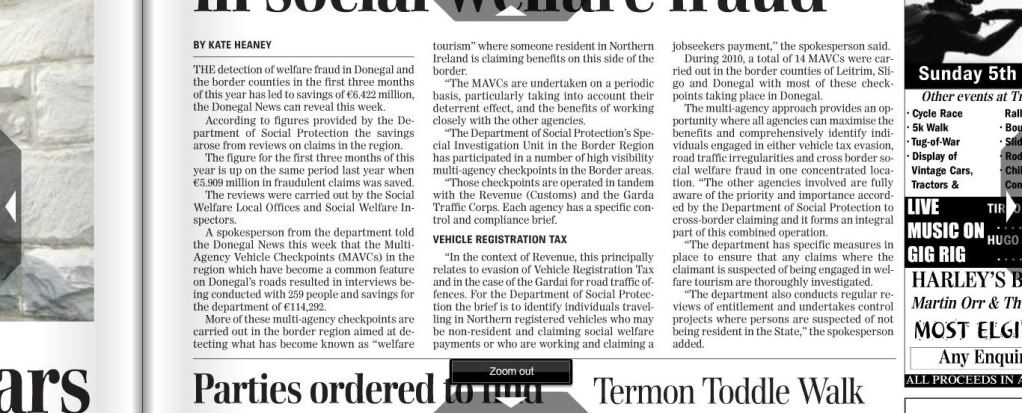
For example, a recent article in the Donegal News (June 2) entitled “Over €6 million detected in social welfare fraud” quotes the Department of Social Protection as saying that these 'savings' resulted from anti-fraud measures and reviews carried out by welfare offices and inspectors. Such newspaper articles and tv programmes such as the recent TV3 documentary and the RTE Prime Time programme in the run up to the Budget in 2009 when welfare cuts were to be first introduced are commonplace in highlighting this supposed widespread 'fraud'. 

There are a number of problems with assuming that all this, or even a significant amount of it, is fraud related. What the department, or the media, doesn't tell you is how many of these people will in all likelihood have their payment returned to them following appeal. In other words they don't tell you how many of them have had their payment stopped unfairly in the first place.

They don't tell you how this will impact on people who are already struggling to survive on pitiful social welfare rates. They don't tell you the hoops these people are forced to jump through and the lengthy delays they will endure to eventually get what they were entitled to all along.

Closer analysis of the Departments claims of fraud and fraud detection tell a very different story to the official narrative.

Over the past decade, of those who have had their welfare benefits withdrawn, cut or refused in the first place, every year between 40% and 50% of those who appeal that decision have those decisions overturned in their favour.

In other words, the fraud and deception taking place is that by those in government trying to portray these people as fraudsters when in fact it was the department of social protection defrauding those people entitled to their benefits. In 2003, the numbers of those who appealed that won their cases was 44%. By 2009 the numbers had risen steadily year in year out to 48%.

Successful Social Welfare Appeals 2003 – 2009 (%)

2009 - 48%

2008 - 47%

2007 - 47%

2006 - 46%

2005 - 47%

2004 - 46.5%

2003 - 44%

This is clear evidence of something fundamentally rotten with a system that year after year gets virtually 50% of such potentially life changing decisions wrong. Yet year after year the only 'reforms' we see implemented are those that make it harder for people in need of and entitled to benefits to secure those benefits.

Many of those who initially have their claims refused or cut do not appeal the decisions for a variety of reasons. In many instances people believe that having been refused that they are not entitled to their payment even though in reality they are.

Between 10 and 15% of those who appeal withdraw that appeal before it is heard. Not surprising considering social welfare appeals can take anywhere between six and twelve months to be heard.

For many people, their circumstances will have changed. For many others, it is the final straw. Fed up and in financial difficulties as a result of being unemployed yet being denied their entitlements many have opted for emigration, a situation that the department and the government as a whole wont lose any sleep over.

The reality is that the vast vast majority of people on social welfare would much prefer to have a job despite the best efforts of the political and media classes to suggest otherwise. During last weeks debate a Fine Gael TD Andrew Doyle said that the government needed to “give people an incentive to stop relying on social welfare.”
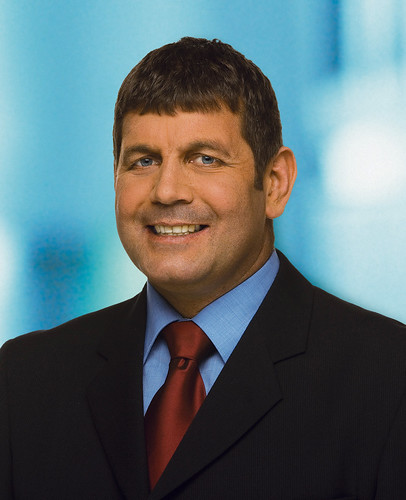
Fine Gael TD Andrew Doyle
 
The clear implication of that is that people are on welfare either by choice or due to lack of motivation or 'incentive' to find themselves a job. It is part of a pattern by the political and media classes to demonise those forced onto social welfare through no fault of their own, and to justify cutting welfare rates and benefits. It is also complete nonsense as there are no jobs out there for people to be “incentivised” to secure, as more than 460,000 unemployed people can attest to.

The statistics for employment growth and long term unemployment also expose the lies that the unemployed don't want to work or need to be pushed and cajoled into taking up employment. Throughout the 'celtic tiger' era, from the mid-nineties right through to 2007, employment grew annually here in the twenty six counties. At the same time long-term unemployment fell to very low levels and remained at those low levels right up until 2007.

More recently, throughout 2009 and 2010 growth in employment plummeted. As a result long term unemployment has soared to record highs in those years. What it reveals is that when there are jobs for people to take up, they will do so  No amount of 'incentives' or intimidation from the department can make people take up jobs that just do not exist.


High unemployment has nothing nothing to do with people being lazy and not wanting to work. It has to do with a lack of jobs. But should we be surprised at the successive governments and the media promoting this notion of 'laziness' and 'fraud'? Of course not. It suits them to put the blame for unemployment on those unfortunate enough to lose their jobs rather than those who are actually responsible for the job losses and unemployment crisis – the politicians themselves.

Before the recent general election, Fine Gael and Labour promised us all real change from the politics of Fianna Fáil who had held the reigns of power for more than a decade. Less than 100 days into office, it is crystal clear that the Fine Gael/Labour coalition are more than happy to jettison their pre-election promises.

They are proceeding along the same path as that of their predecessors in Fianna Fáil, bowing to their masters in the IMF and ECB, scapegoating and targeting low paid workers and social welfare recipients, while protecting the assets of the wealthy. The agenda remains the same. All that the general election has changed is the names and faces implementing it.

Wednesday, January 26, 2011

éirígí announce Leinster House Finance Bill Protest for Saturday

The socialist republican party éirígí are to hold a demonstration outside Leinster House in Kildare Street this Saturday January 29th.  The protest which will commence at 5.30pm has been organised in opposition to the Finance bill which is currently being fast-tracked through Leinster House.


Announcing the demonstration Cathaoirleach éirígí Brian Leeson said that people need to take to  the streets to resist the savage cutbacks being imposed from Leinster House on behalf of the International Monetary Fund (IMF) and the European Central Bank (ECB).

Leeson said:  “The Finance Bill which is currently being fast-tracked through Leinster House is set to be the final shameful piece of legislation enacted by this Fianna Fáil led administration.  It will give a legal basis to last November's blood budget.  This will enable the continuance of the policy of making working class  families and communities pay for the greed and corruption of bankers, developers and property speculators.”

“The true cost of this Finance Bill and the grubby deal arranged  with the IMF will not be measured in euros and cents.  Rather, it will be measured in levels of homelessness, in the severe decline of educational standards and in the massive increase in ill-health and ultimately unnecessary deaths of working class people that will inevitably result from it.”


Leeson concluded by urging people to take to the streets:

“We have an obligation, not just to this generation but to future generations to resist and fight back.  We need to drive the IMF from our shores, to burn the bondholders, to reverse the cutbacks and to establish the sovereignty of the people.  éirígí are urging people to take to the streets on Saturday to send a clear message to the IMF that their dictatorship will be resisted regardless of what puppets are implementing their dictats in Leinster House.”

Monday, June 28, 2010

Social Housing Leasing Scheme - a “bail-out for developers”

According to the housing and homeless charity Focus Ireland, there are currently in the region of 100,000 households on local authority social housing waiting lists across the State, 5000 people who are homeless at any one time and more than 93,000 households receiving rent supplement due to difficulty in paying their rent within the private rented sector.

At the launch of their annual report published last month,  they said that the Dublin government would fail to meet its public commitment to end homelessness by the end of this year.  They also warned that the absence of more effective action by government would only result in a deepening of the housing and homeless crisis as the need for housing is now greater than ever.
Describing those statistics as "shocking", Focus Ireland Life President and Founder Sr. Stanislaus Kennedy said that “these dramatic increases in housing need have taken place at a time when we have been building more houses than ever before.  How can it be that Ireland managed to build in the region of 250,000 homes that were not needed during the boom years yet we have still failed to provide enough homes for those who need them most?”

Questioning the governments priorities and lack of investment in housing, Sr Stanislaus asked "how can the government secure €50 billion to bail out the banks but at the same time cut welfare payments and continue to underinvest in housing and essential services?"
In county Donegal there are around 500 families on the housing waiting list, while here in County Sligo alone there are in the region of 1400 families waiting to be housed by both Sligo Borough and County Councils. 

Last year, the Department of Environment, Heritage and Local Government introduced what is called the Social Housing Leasing Scheme.  According to the Departments website, the supposed aim of the scheme is to expand the options "available to local authorities for the delivery of social housing. Properties will be leased from the private sector and used to accommodate households from local authority waiting lists. Leased properties will be allocated to tenants, in accordance with the local authorities allocations schemes".

Under the scheme Councils are entering into lease arrangements with property owners for periods of between 10 – 20 years.  Among the benefits the developer will secure is that their properties will be tenanted, managed and maintained throughout all of this period by the local authority.

Even better news for the property owners is that the rent they receive from the council will be guaranteed for the entire time of the lease, and that rent will be an ‘inclusive’ one that includes all rates, charges and taxes that may apply to the leased property. The houses will also be provided unfurnished and on  a ‘repair and insure’ basis where the Local Authority will be responsible for the insurance, maintenance and general repair of the properties. 

However éirígí Sligeach activist Gerry Casey has dismissed the scheme as "no solution" to the housing crisis and "nothing more than another bail-out  for developers". 

Accusing Fianna Fáil and the Greens of ignoring the plight of the homeless and those on housing waiting lists, Casey said:

"This is yet another shameful bail-out of developers  cynically dressed up as a measure to tackle the housing crisis.  The only people to benefit will be those developers who will basically have their mortgages paid and have their investment maintained at tax payers expense for between 10 to 20 years before being handed back to them in pristine condition." 

He added:  "For those in need of housing, being allocated one of these properties  by the Council to rent will not offer any long term solution.  All it provides is uncertainty as families will have no security of tenure.  Once the lease between the council and the developer runs out, the families and individuals in question will  be put out of their home and once again be placed back on the waiting list and in need of housing.  This is an unacceptable situation for families to be placed in."

"What families need, and what this administration has failed miserably to deliver, has been not just a house but more importantly a home.  Security of tenure is central to that."

"This also makes the threats to punish those who refuse to take up the offer of one of these properties by having them lose their place on the waiting list all the more despicable.  Housing is a right, not a privilege."

éirígí Tír Chonaill spokesperson Micheál Cholm MacGiolla Easbuig also attacked the scheme describing it as "scandalous" and "unjustifiable".


He said:  “Having local councils basically paying the mortgages of property developers and maintaining their properties at tax payers expense for between ten or twenty years is a scandalous and unjustifiable move. The developers who built these houses, driven by greed and a belief that they could make themselves rich on the backs of working families by selling the properties at grossly over-inflated prices, have now been left unable to sell them as the economy collapsed.”

“Along with the policies of this government and the bankers, this unbridled greed by developers also contributed greatly to the current economic crisis. Now their Fianna Fáil cronies are rescuing them by means of this long term scheme which sees tax payers pay to protect these developers investments while the developer doesnt have to spend a cent or lift a finger.”

“Fianna Fáil are happy to see families lose their homes and hundreds of thousands of people lose their jobs. They are happy to impose savage cuts in income for low paid workers and welfare recipients. They are happy to see our young people emigrate once again and they are more than happy to shut hospitals and reduce and remove essential health services.”


He concluded: “However, when it comes to allowing developers take a loss or go out of business as a result of their greed, thats a step too far. Fianna Fáil insist that they must be protected, just like the banks. That's what this scheme is about. That's Fianna Fáil priorities for you.”

Monday, May 24, 2010

Thousands march to demand retention of Lifford Hospital


Thousands of people took to the streets of the border town of Lifford in County Donegal on Sunday (May 23) for a march and rally opposing HSE plans to shut Lifford Community Hospital. In sweltering heat, the large crowd assembled at the grounds of the threatened hospital before marching to the Diamond in the town.

Amongst those who addressed the Rally at the Diamond were representatives of the Save Lifford Hospital group, local clergy and political representatives as well as speakers from IMPACT, SIPTU and the INMO trade unions.


Speaking after the rally, éirígí Tír Chonaill spokesperson Micheál Cholm MacGiolla Easbuig who had taken part in the march with other éirígí activists, said that the demonstration sent a loud message to the HSE and their political masters in Leinster House, that the hospital is not for closing, and that they must fund our hospitals instead of the banks.


MacGiolla Easbuig said: “This Fianna Fáil led administration are systematically dismantling and destroying the public health service. Not only must their savage cutbacks be reversed, but our hospitals and the essential services they provide must be upgraded and provided with the necessary staff and resources so sadly lacking at present.”


He added: “There is a a general policy of slash and burn by Fianna Fáil and the Green party towards public health services in this country. Hospitals are being downgraded and shut down completely. Services are being reduced and moved further away from local communities. There are ward closures, bed removals, staff reductions and cuts in home help to highlight just a some of the outrageous and unjust cutbacks being imposed.”


“Make no mistake, the future of Lifford Community hospital is under serious threat. If we are to prevent its closure, then people power is the only way to do it. Todays march and rally was an excellent start but the momentum now needs to be maintained and intensified on the streets.”


MacGiolla Easbuig concluded: “The thousands of people who marched through Lifford today sent a loud and clear message to Fianna Fáil and the HSE. That message is to fund our hospitals, not the banks. As a community we have had enough of these savage health cuts and the closure or reduction of sevices in Lifford hospital will not be tolerated. We deserve a first class health service easily accessible and available to all based on a persons medical need, not their wealth.”


You can view more photos from Sunday's march & rally by clicking here


Friday, May 21, 2010

Save Lifford Hospital – Fund our Hospitals, not the Banks


éirígí Tír Chonaill spokesperson Micheál Cholm MacGiolla Easbuig has called on the Fianna Fáil/Green party coalition to fund our hospitals and health service instead of the banks. He also called on the public to turn out in large numbers at Sunday's protest march and rally for the retention of Lifford Hospital.

MacGiolla Easbuig said: “The savage cuts that this administration have imposed on the health service must be reversed. Fianna Fáil are systematically dismantling and destroying the health service.”


He added: “Throughout the country, including here in the north-west, we have seen ward closures, bed closures, staff reductions and a downgrading of our hospitals and health service generally. Let no one be under under illusion, Lifford hospital is now firmly in the sights of the HSE and its future is under serious threat. The only way that we can prevent this government and the HSE and shutting this hospital is by people power.”


MacGiolla Easbuig concluded: “I would urge people throughout the north west to attend Sunday's demonstration in large numbers. We need to send a loud and clear message to Fianna Fáil and the HSE that as a community we are sick and tired of the savage health cuts being imposed on us, that we deserve a first class health service and that we wont accept the closure of Lifford Hospital or further reduction in services. The message is clear. Fund our hospitals, not the banks.”


Wednesday, May 19, 2010

éirígí challenge “gas campaigners” over refusal to support nationalisation


A delegation from a local campaign group seeking to have the gas network extended to Sligo and the north-west met with the Junior Minister for Communications, Energy and Natural Resources Conor Lenihan on Wednesday (May 19). Amongst those taking part in the delegation was Sligo/North Leitrim's three TD's, Fianna Fáil's Jimmy Devins and Eamonn Scanlon as well as Fine Gael's John Perry.

Also participating on the delegation were Fianna Fáil Senators Marc MacSharry and Geraldine Feeney, Labour party Mayor of Sligo Jim McGarry, Hugh McConville of Sligo Council of Trade Unions, as well as representatives from Sligo Chamber and Sligo Fair Dealers.


This meeting was originally due to take place four weeks ago but had to be postponed and re-arranged due to Lenihan's unavailability. In recent weeks, another delegation which included Senator Marc MacSharry and Deputy Eamonn Scanlon, met with the CEO of Bord Gais John Mullins on this very same issue.

Deputy Devins, who has repeatedly called for the Corrib gas to be piped to Sligo because of its close proximity, described the meeting as "positive". This is despite the fact that it was re-iterated to the deputation that a government subvention of €39 million was needed before the gas network could be considered to be extended to Sligo and that the government remained unwilling to fund such a venture. Devins said they would now seek a meeting with the gas regulator to press their case further.
The role of Jimmy Devins in recent months in organising delegations to meet with Ministers and with Bord Gais on the issue of the Corrib gas and bringing it to Sligo cannot have been missed by anyone who has been following these events. His enthusiasm and dedication to this campaign has not gone unnoticed. For those who think this is commendable, think again.

As éirígí have repeatedly pointed out, under the current arrangements, the only people who will benefit from the Corrib gas, will be Shell and their shareholders. So for those who believe Devins zeal to secure a new market for the Corrib gas in Sligo is just the public spirited and altruistic actions of a public representative keen to serve his electorate, nothing could be further from the truth.


According to the Leinster House Register of Interests published earlier this year, Devins is a shareholder in Standard Life. This is a company that holds over 46 million shares in Shell oil, who have been given the rights to the Corrib gas off the Mayo coast by Fianna Fáil and is one of its biggest shareholders.


So Devins and fellow shareholders, which includes other party colleagues and TD's in Leinster House, unlike the rest of the Irish people, will benefit financially from the Corrib gas being brought ashore, sold under current arrangements and brought to Sligo. It is in his financial interest to oppose any talk of nationalising the Corrib gas and all our natural resources.

It explains quite clearly his support for Shell to get their pipeline built in north Mayo. It also explains his enthusiasm to press the government for almost €40 million of tax payers money to be spent on a project that will benefit his bank balance and that of his fellow shareholders - not the people of Sligo, the north-west or the island as a whole.

However, his enthusiasm does have limits. It does not, for example, extend to preventing his party from imposing savage cutbacks at Sligo General Hospital, with cuts of €12 million to this years budget confirmed by the HSE. This comes on top of cutbacks in recent years which have decimated services at the hospital. More than 70 beds have been removed, wards have closed, waiting lists have increased for essential procedures like colonoscopies, cancer services were removed to Galway and front-line staff numbers have been reduced to what many believe are unsustainable and unsafe levels.

Perhaps the fact that reversing those cutbacks at Sligo General will not benefit Deputy Devins financially, and will only benfefit working people in need of decent health care, explains Devins' lack of enthusiasm for campaigning on this particular issue.

If he was genuinely interested in bringing the gas to Sligo in order to benefit everyone, as éirígí and others are, then he would be wholeheartedly supporting the nationalisation of ALL our natural resources and packing Shell out of Ireland with their tail between their legs. The fact that he has consistently refused to even discuss the issue tells its own story.

Following the meeting on Wednesday éirígí Sligeach activist Gerry Casey challenged those involved in the deputation to explain why they refuse to publicly support the nationalisation of our natural resources despite being repeatedly asked to do so.

Casey said: “If these campaigners who met Lenihan today are serious about bringing natural gas to the north-west, then they need to publicly support the campaign to take back our natural resources. éirígí have already publicly and through correspondence requested that those who met with Lenihan, and previously met with Bord Gais CEO John Mullins, to publicly call for the nationalisation of our oil and gas. To date, they have refused to do so. They have also refused to explain why.”


He added: “Those on the delegation have been told that to extend the gas network to Sligo would require a once off subvention from the Dublin Government of €39 million, which to date has been ruled out. However, the simple solution is to nationalise these valuable resources, extract them safely and use that vast wealth to benefit all the people on this island, not just the shareholders of multi-national oil and gas companies.”

“Under the sea off our shores, lies hundreds of thousands of euros worth of oil and gas that rightfully belongs to the Irish people. By nationalising these resources, the vast wealth generated would make the cost of extending the network to Sligo and other parts of this island a non-issue. At the present time, lack of finance is the excuse. Nationalisation takes away that excuse.”


Casey concluded: “Once again, éirígí are challenging those delegation members to publicly justify their reasons for refusing to support such a simple and just demand that would benefit all the people of this island and not just the shareholders of oil and gas companies. At a time when savage cutbacks in income and essential public services are being imposed, if they are content with this giveaway to multinationals of hundreds of billions of euros that could instead be used to create economic prosperity for all then, let them explain to the public why that is so.”

Freedom for Pat O’Donnell

Freedom for Pat O’Donnell

Pat  O'Donnelléirígí chairperson Brian Leeson has called on people to come out in support of the Dublin Shell to Sea protest at Shell HQ on Friday [May 21].

The protest, which will commence at 5pm, has been called to mark Erris fisherman and prominent Shell to Sea activist Pat O’Donnell’s 100th day in prison.

Leeson said: “The imprisonment of Pat O’Donnell at the behest of Shell is a travesty of justice and a clear demonstration of the corrupt nature of the Twenty-Six County state. The rights of citizens are being subordinated to the interests of the profits of multinational corporations.

“Pat O’Donnell’s only ‘crime’ was to stand up for the rights of his community and to demand they be allowed to live in peace and safety. The imposition of Shell’s experimental high pressure gas pipeline project in Erris has been bravely resisted by that community for over a decade. For refusing to bend the knee to private profit, they have been vilified, criminalised, beaten off the streets and many activists, including Pat, have been imprisoned on trumped up charges.

“People like Pat have been an inspiration to all of us who strive for a society that puts the rights of its people before private profit.”

Leeson continued: “In a week when protestors against NAMA and the bank bailout, including éirígí activists, have faced the full brunt of state brutality, it is important that support and solidarity is demonstrated to those who have faced similar treatment from the forces of the state.

“The Shell to Sea campaign and the events of recent weeks have highlighted the fact that the state will attempt to stamp out all resistance to its defence of private profit. The Gardaí, despite the weasel words of their senior representatives at the recent GRA conference, have made it clear time and again that they are simply a force that will, at all times, defend private interests. History however, has demonstrated that the will of a risen people is not easily extinguished. The people of Erris and the Shell to Sea campaign have shown that determined and organised resistance can halt the onward march of private capital.”

Contrasting the treatment of campaigners like O’Donnell and Fianna Fáil’s banker and developer friends, Leeson said: “Over the last 12 months, despite ample evidence of endemic corruption; not one banker, developer or speculator has faced the courts. Indeed, many of these people have been rewarded for their corruption and avarice. This is not all that surprising given that Fianna Fáil, has, for decades, been bankrolled by developers, speculators and bankers.

While former Anglo Irish Bank boss Seán Fitzpatrick is free to jet around the world on sunshine holidays and former boss of National Irish Bank Michael Fingleton is given a €1 million pension pay off, honourable men like Pat O’Donnell languish in prison cells. Meanwhile, the giveaway of Irish natural resources to multinational oil corporations continues at the same time as the state is implementing savage cuts in public services: cuts that are driving down the living standards of workers and creating real hardship in working class communities across the state.

Leeson concluded: “It is becoming increasingly clear that, unless people get out on the streets and stay on the streets, this state will continue to trample on the rights of citizens. Pat O’Donnell is one of the people who have refused to bend the knee, justice needs to be served and he should be released from prison immediately. éirígí is calling on people to show their support for him on Friday.”

The Dublin Shell to Sea protest takes place on Friday, May 21 at 5pm at the Shell HQ on Lower Leeson Street, Dublin 2. For further information, check www.dublinshelltosea.com

Right to protest asserted on the streets of BÁC

For the third time in eight days, éirígí activists in Baile Átha Cliath were again on the streets last night [Tuesday] in opposition to the right-wing economic policies of the Twenty-Six County government. On this occasion it was as part of a multi-organisational anti-capitalist block which formed part of the Right to Work demonstration outside Leinster House. As in excess of 350 protesters gathered at the Wolfe Tone monument on Stephen’s Green the Garda helicopter rattled noisily overhead and dozens of Gardaí watched on.

Assembling at Stephen's Green

Following a number of short speeches the march attempted to set off, only to find the road blocked by a line of Gardaí and four Garda horses. With typical arrogance the Garda could provide no adequate explanation for blocking the free passage of a political demonstration.

Garda presence outside Anglo Irish Bank

Undeterred by the Garda tactics the crowd surged forward to chants of ‘Whose Streets? Our Streets!’, before making its way to Anglo Irish Bank Headquarters, just two hundred metres away. Outside the bank a number of speakers addressed the crowd including Cathaoirleach éirígí Brian Leeson. The protest then continued onto Dawson Street before joining the Right to Work rally on Molesworth Street.

Section of the crowd at Molesworth Street

Even the constant rain could not dampen the spirits of the estimated 1200 people in attendance. So much so that even after the Right to Work rally has finished up to 150 people made their way closer to Leinster House to chants of ‘Regulation Doesn’t Work, Let the Banks Burn!’.

Wanted for Economic Treason

Once at the Garda lines the protesters were addressed by Brian Leeson, who encouraged people to show that they were not intimidated by the Garda tactics of recent days. With chants of ‘Whose Cops? NAMA’s Cops!’ the crowd did just that. Despite provocation from the Garda the protesters remained disciplined and dignified before returning to the other end of Molesworth Street and dispersing.

Brian Leeson speaking near Leinster House

Speaking after the demonstration éirígí spokesperson and Dublin City Councillor Louise Minihan said, “Tonight was another important step in building resistance to the NAMA republic. With each passing week the numbers of people turning out to these protests are growing. Nobody should think that we are going to win this battle in the next week or two. It is going to take months and years of hard work to reclaim this country from the golden circle, but it must be done.

Jail the Bankers

“Each and every one of us need to make it our business to get our friends, families and workmates onto the streets. It’s a simple fact that 90% of the people of this state have everything to gain and very little to lose by a radical change in the way that wealth and power are distributed.”

If you are interested in joining or helping éirígí please:

Phone: 00353 (0) 86 236 72 98

or
Email: eirigimembership@gmail.com

Friday, May 14, 2010

Colonoscopy waiting list times placing lives needlessly at risk

Bowel cancer is the second most common cause of cancer in Ireland, with more than 50 per cent of bowel cancer patients diagnosed with the more advanced forms of the disease, stages 3 and 4. The unfortunate reality is that less than 5 per cent of patients with stage 4 bowel cancer survive more than four years. As with many forms of cancer, early detection is vital, and can mean the difference between life and death.

According to the Irish Cancer Society (ICS) a colonoscopy has been proven to be the most effective method to diagnose the disease. The ICS insist this procedure needs to be carried out between four and six weeks after referral. Indeed, in a letter back in December 2008, Health Minister Mary Harney herself told the HSE she wanted all people awaiting colonoscopies to be seen within one month.

Information provided by hospitals to the National Treatment Purchase Fund (NTPF), which manages public hospital waiting lists reveal that there are now 951 people in the 26-counties waiting longer than three months for a colonoscopy. That is an increase of 229 people on the waiting list from September 2009.

The information collated by the NPTF reveals that the figures for the waiting list at Sligo General Hospital has increased to 99 compared to 74 in March and 44 back in December. Galway University Hospital has also seen an increase of 70 percent with 106 patients now waiting for a colonoscopy, up from 62 patients in March, while the figures for Letterkenny General Hospital have jumped to 56, increasing from 43 in March and from 25 in December. The Beaumont Hospital in Dublin has gone from 66 to 131, a massive 98 percent increase. This is up from just 9 people on their waiting list back in December of last year.


The Irish Cancer Society (ICS) have described the increases across the majority of hospitals as very worrying. Kathleen O’Meara, Head of Advocacy and Communications at the ICS, said they were “seriously concerned to see that the total number of people waiting has increased by over 30 percent in just over six months.”

She also expressed concern over the impact these ever increasing waiting lists would have on the screening programme which is due to commence in 2012. According to Ms O'Meara “unless the problem of waiting lists is tackled in advance of screening being delivered, we are not sure that we can have full confidence in the ability of our hospital system to deliver screening while not impacting symptomatic services at the same time.”

This is all par for the course for an administration that has always shown contempt for the lives and well being of the people they claim to represent and govern on behalf of.

Health services have been slashed right across the board in recent years, with more cutbacks planned. We have seen the postponement in recent years of the cervical cancer vaccine for young girls which is only now being rolled out. Cut-backs in home help have also caused enormous hardship and anguish for elderly and ill people right across the country, as this service provided a lifeline for many vulnerable people in need of assistance. Now it is believed that the HSE are looking at closing or limiting the opening hours of accident and emergency units in order to cut the health budget even further.

Here in the north-west alone, we have seen the removal of 72 beds from Sligo General Hospital and the closure of wards. The Hospital is seriously understaffed with most wards operating with two to three nurses less than they require, according to the Irish Nurses and Midwives Organisation (INMO).

Cancer services were also removed last year to Galway University hospital which is unable to cope with the increased workload, as campaigners against the move accurately predicted. There was also a delay of ten years in bringing the breast screening service BreastCheck to the north-west. Now following its eventual arrival last year, it is short staffed, resulting in even further delays in women receiving their appointments for what is, like a colonoscopy, a potentially life saving procedure.

Mayo General Hospital in Castlebar is facing imminent cutbacks of €9 million and the closure of a male surgical ward and possibly more. Other smaller hospitals in the region are also suffering ward closures, staff reductions and reductions in services. In County Leitrim, and indeed a number of other counties around the state, it was recently revealed that they shamefully have no dedicated therapeutic services for children who suffer sexual abuse.

Mary Harney and her cabinet colleagues regularly talked about the need for prioritising. In fairness, she has kept her word. Her priority and that of her government colleagues is to protect the wealthy political and business elite and continue their greed before need and privatisation agenda at the expense of the working people and those most in need in this state.

Given the choice between creating and funding a first class health service freely and easily accessible to all, or bailing out the banks, they have chosen to bail out the banks. If people die as a result of their decisions, which they undoubtably have and will continue to, they are viewed as merely “collateral damage” in their ideological quest for profit and the attainment of ever increasing wealth.

Reacting to these latest figures, éirígí Sligeach activist Gerry Casey condemned the HSE and their political masters, described these lenghty waiting lists as “unacceptable” and “placing lives needlessly at risk”.

Casey said: "éirígí are extremely concerned at the continuing high numbers waiting more than three months to receive potentially life saving colonoscopy testing. The fact that an increasing number of patients referred to Sligo General and other hospitals around the state have to endure such a lengthy delay for their colonoscopy is totally unacceptable."

"Once again, the Dublin government and the HSE seem intent on needlessly putting people's lives at risk by not providing efficient and proven measures to detect and prevent the deaths of Irish citizens from various forms of cancer. As waiting lists and delays increase, as is currently happening, lives will inevitably be lost as a result of this debacle."

Casey concluded: "There is no excuse for people having to wait months for a procedure that could save their lives and which should happen within weeks of referral. It is a matter of deliberate political decisions being taken by this administration who have repeatedly shown that they care little whether working class people suffer unnecessarily or even die unnecessarily."

Saturday, May 8, 2010

éirígí accuse Labour of 'cowardice' over Croke park pay deal


Sligo éirígí activist Gerry Casey has accused the Labour party of “cowardice” for refusing to take a stand against the Croke Park public sector pay and reform deal. He also challenged local Labour party councillors and representatives to publicly declare their position on this deal.


Casey said: “The Labour party have refused to take any stance on the shameful public sector pay and reform deal agreed between the government and ICTU leadership, despite the negative impact this deal will have on workers. Indeed, one of their TD's Kathleeen Lynch went as far as to tell Newstalk radio (May 7) that it was 'none of their (Labour's) business'.”


He added: “James Connolly and Jim Larkin would be spinning in their graves at the cowardice and lack of action in defence of workers by those who claim to inherit their political legacy. By staying silent they have exposed once again their contempt for the right of working people to resist the savage cutbacks imposed on them by the current leinster House administration.”


“While it is despicable, it is not surprising. Labour have consistently betrayed workers interests, most recently, when Labour leader Eamonn Gilmore publicly sided with the wealthy political and business elite in opposing the planned national strike by workers last March.”


He concluded: “If the rights and living standards of all Irish workers and their families are to be protected then the Croke park deal needs to rejected. I am now challenging the Labour party representatives here in the north-west to publicly declare their position on this deal. Do they believe like their party colleagues that the deal and the negative impact it will have on workers, including their ability to take industrial action, is 'none of Labours business'? They must stop hiding and clarify their position publicly.”

Tuesday, May 4, 2010

New British Army Recruiters - FÁS

The article below is reproduced courtesy of Sligo Today


Who's taking the Queens shilling - It would appear that an Irish FÁS sponsored unemployment advisory office is now acting as a Recruiting Office for Her Majesty's Armed Forces.

The Millennium Jobs Club based in the Watch House Cross Shopping Centre in Limerick, whose letterhead has the FÁS logo along with the National Development Plan logo endorsing it's activities, has been advising jobseekers that there are 'many careers on offer' in today's British Army.

It fails however to advise that a new overseas military career could put the applicants directly in harms way as the British Army is currently fighting a war on two high-profile fronts, Iraq and Afghanistan. There are also many worldwide covert active service 'hot spots' enjoying the presence of the soldiers. In both primary theatres of conflict many deaths and serious casualties are being recorded on a daily basis.

The Limerick Jobs Club also omitted to inform any applicants that it's recruitment policy is illegal and that under the current Irish law stiff penalties could be imposed for attempting to recruit Irish nationals, in Ireland, for a foreign army.

The letter, dated 19th April 2010, to an job seeker enquirer is reproduced below. The addressee's name has been removed.

The 'Royal Irish Army', see letter below, refers to the Royal Irish Regiment with it's headquarters in St.Patrick's Barracks, Ballymena, Co Antrim and was renamed from the original the Royal Irish Rangers. Battalions of the Irish Regiments have featured prominently in all wars, including the present operations.

Several members of the regiment have been 'upgraded' to MI5 status and have been assigned to the spooks HQ, Palace Barracks in Belfast, where over 400 agents are currently based.

éirígí Sligeach activist Gerry Casey said “That Fás believe it is appropriate or justifiable to target the unemployed in this country by becoming recruiters for the British army is appalling.”

“This is an organisation responsible for the slaughter of thousands upon thousands of civilians in Iraq, Afghanistan and here in Ireland. They continue to occupy part of our country. British troops, including undercover troops from the Special Reconnaissance Regiment, a sister regiment of the SAS, have been involved in military operations just across the border in Garrison in Co Fermanagh and in Derry in recent months.”

“The skies above Fermanagh and Tyrone are being used by them to train their pilots for their war in Afghanistan which has resulted in the widespread slaughter of innocent Afghan civilians.”

“Recruiting cannon fodder for foreign armies, no more than emigration, is not a solution to our unemployment crisis. While it may suit the Dublin government to see young Irish people squeezed by job losses and then dole cuts to emigrate or enlist to kill and be killed in the imperialist adventures of foreign armies, Fás must immediately cease their role as recruiters and propagandists for the British army murder machine.”


Friday, April 2, 2010

This is Criticial Because This is Class War

Brian LenihanThe proponents of capitalism never tired of telling us how it is not the state’s role to interfere in the ‘free market’ – that economic competition between private producers and investors is key to economic growth.

They never tired of telling us that incentives, in the form of profits, were essential to convincing ‘bold entrepreneurs’ to take investment ‘risks’. They never tired of telling us that this was the only way to successfully generate rising levels of economic growth and wealth that would, ultimately, it was argued, trickle down and benefit all of society. Nor did they ever tire of telling us that, if these investors happened to make bad investment decisions, then they alone would face the consequences; it was only fair that, in the same way as they were handsomely rewarded for the successful risks they were taking, so too should they suffer the losses when their investments failed. That is some of the logic of capitalism. So the theory went anyway.

On Tuesday [March 30], the Twenty Six County minister of finance Brian Lenihan exploded that particular set of myths with the announcement in Leinster House, that, far from the people being sovereign, they would, in effect, be paying the debts of private banks for decades to come. By his actions, Brian Lenihan has confirmed the contempt in which the political establishment holds the very people who elect them.

The detail of the further bail-out of the banking system is truly staggering in its scale: a total of €21 billion [£18.7 billion] to rescue a failed and corrupt system.

Of this total, €8.3 billion [£7.4 billion] will be pumped into Anglo-Irish Bank, for so long the play-thing of the Twenty-Six County state’s biggest property developers. It doesn’t end there either, as Lenihan announced that a further €10 billion [£8.9 billion] will be required for AIB alone. Prior to Tuesday’s announcement, AIB had already received €4 billion [£3.6 billion] of taxpayers’ money. To put this €21 billion in context, the combined health budget and education budget in the year that the bank guarantee scheme was agreed was €23 billion [£20.4 billion].

The consequences of this decision will be felt for a long, long time; the mass of people face unemployment, reduced public services and chronic levels of debt for generations to come.

The right of the people to quality healthcare, housing and education is being made subordinate to the interest of banks, speculators and developers. Workers pension rights are being sold off so that the fat-cats that bankrolled Fianna Fáil for decades can be saved.

Bertie Ahern and Bernard McNamaraOn Tuesday, many of these property developers, almost all of whom regularly attended the Fianna Fáil fundraising tent at the Galway races during the so called boom years, had their loans transferred into NAMA. Among them were Liam Carroll, Bernard McNamara, Seán Mulryan and Johnny Ronan, the playboys of the Celtic Tiger, lauded by the corporate media as the men who were taking the big risks to build a thriving economy. These parasites, facilitated by their political wing in Fianna Fáíl, simply inflated the property bubble, forcing thousands of households to take out 100 per cent mortgages on homes that were incredibly over-valued. These householders are now expected to pick up the tab for this gambling greed.

The consequences of the bank guarantee scheme of September 2008; a scheme that Fianna Fáil, Fine Gael, the Green Party and Sinn Féin all supported, is now painfully evident. Secret meetings between senior bankers and Dublin government ministers thrashed out a deal that was foisted upon an unsuspecting public. The loans and deposits of all banks were guaranteed on that September night in 2008 with little detail provided as to the exact state of the banks’ loan books. Any semblance of democracy has been truly torn to shreds and all that is offered is the tired Thatcherite mantra, ‘There is no alternative’.

No alternative, it seems, to bailing out the rich and powerful in Irish society with billions of euro of taxpayers’ money, while workers who actually created the wealth are consigned to the dole queues. With high rates of unemployment, bosses are using the recession to try and force down the pay and working conditions of those still in work. The deal agreed between ICTU negotiators and the Dublin government this week represents yet another shameful sell-out of public sector workers. It is utterly astonishing that union bosses are agreeing to a four year pay freeze and cuts in overtime for public sector workers while tens of billions is being spent bailing out the banks. The privatisation of sections of the public sector will follow unless workers demand that enough is enough.

This system has never been so clearly exposed as the fetter on human development it is as it was after Lenihan’s announcement. War has been declared on workers who are being treated once again as mere cogs in a profit-producing machine. That these egregious amounts of bailout funds can be made available now to rescue the capitalist banking system gives the lie to the notion that there is not enough money in society to take care of the totality of the social needs of people.

It is a lie that this type of society serves the needs of anyone but a small minority. We, the working people, need to take as our starting point in our understanding of this the fact that it is the working class alone who are the creators of wealth and that it is only through exploitation that wealth passes out of their control into that of the capitalist. Most importantly, we need to understand that this bank bailout presents stark and condemning proof, if ever more proof were needed, of the fact that, in this type of society, there is an irresolvable conflict between the interests of the capitalist class and those of the working class.

The task for socialists and republicans now is to find ways of highlighting this reality to the working and unemployed people that are the victims of capitalism. For it is only through effectively agitating and organising among our people that we will have a fighting chance of ever building the forces required for this economic system to be pulled off its hinges and a new, socialist one, built in its stead.

This is a critical task because this is class war.
