Showing posts with label fine gael. Show all posts

Sunday, September 18, 2011

Sligo Protest Demands Fracking Ban

Sligo éirígí activist Gerry Casey has re-iterated the party's continued opposition to the giveaway of our natural resources.  He also expressed support for calls to ban the process of extracting natural gas called hydraulic fracturing, also known as 'fracking'. 

Casey was speaking following a protest on Saturday night (September 17) outside the Sligo Park Hotel where the Minister for Communications, Energy and Natural Resources Pat Rabbitte was attending a function.


Between 40 and 50 protesters braved the heavy rain to make their concerns known to the Minister.  They made clear their total opposition to fracking and called on the Minister to impose an immediate ban on its use in Ireland similar to bans imposed in other countries and in some states in the USA.

This is just the latest in a series of protests and public meetings organised by residents throughout the north-west. It follows the commencement of exploratory works to discover commercial gas by Australian company Tamboran Resources in what is known as the Lough Allen basin.  The Lough Allen Basin covers parts of counties Cavan, Donegal, Fermanagh, Leitrim, Mayo, Monaghan, Roscommon, Sligo and Tyrone, covering an area of 8000 square kilometres in total. 


Speaking following the protest, éirígí Sligeach activist Gerry Casey who was among the demonstrators, said:

"An immediate halt must be called to this entire process.  Despite paying lip service to it, there has been no meaningful consultation by the Dublin government or by Tamboran with the communities set to be affected by this exploration and extraction of natural gas despite the massive dangers involved.  More importantly the communities affected have not given their consent for it." 


He added:  "Once again éirígí supports the call for the process known as fracking to be banned.  The potential for grave environmental damage and the dangers posed to human and animal health and safety are too great and cannot be ignored.  The health and safety of the people of the region must be put before the quest to amass profits by private exploration companies."

Casey also called for the nationalisation of all our natural resources.  He said:


"The decision by Pat Rabbitte and his colleagues in the Fine Gael/Labour coalition to continue with the shameful policy of giving away valuable natural resources begun by Fianna Fáil can only be described as despicable.  These resources, whether it is the Corrib gas off the Mayo coast or the onshore gas in the Lough Allen and Clare basins, should be taken into public ownership.  If, and only if, those resources can be safely extracted without damage to our environment and to health and safety then the wealth created should be used to benefit the people of Ireland not the shareholders of private exploration companies."

Casey concluded:  "Let Tamboran Resources as well as Pat Rabbitte and his colleagues be fully aware that the people of this region will not roll over and accept the current situation.  If they ignore the massive opposition that there is within this region to this process, then just as Shell  and the Dublin government discovered in north Mayo over the past decade, they too will meet fierce and determined resistance here."


Friday, July 1, 2011

Say No to Water Tax – Keep Our Water Public!

Louise Minihanéirígí Dublin City councillor Louise Minihan has slammed the confirmation that the Dublin government intends introducing new water and family home taxes from early next year.


Minihan said: “The coalition's confirmation that water and family home taxes are to be introduced is yet another attack on hard pressed working people already burdened with privately accumulated banking debt."


“The diktats of the IMF/EU are being implemented with vigour by a Fine Gael/Labour coalition that promised change but is simply delivering more of the same neoliberal policies that created the economic crisis."


“The imposition of a water tax is simply the first step on the road to the full privatisation of the domestic water supply and will be resisted by working class communities across the Twenty-Six Counties.”


The water charges announcement was made last month at a conference in Dublin which discussed the installation of domestic water meters across the Twenty-Six Counties. It was addressed by Twenty-Six County environment minister Phil Hogan and representatives of private business interests seeking to profit from the installation of a water metering system and the inevitable privatisation the domestic water system.


Water supply has become a major global business, with multinational corporations amassing enormous profits from the privatisation of domestic water supplies.


Amongst those addressing delegates at the conference was Darren Bentham, director of universal water metering with the Southern Water Company in England. The recent history of that company demonstrates how global financial interests are profiting from the commodification and privatisation of domestic water supply.


The company has passed through the hands of various private investors since the Thatcher water privatisation programme in 1989. In 2007, Royal Bank of Scotland sold the utility company to a consortium of international investors for £4.3 billion. The Greensands consortium, made up of a fund advised by JP Morgan investment bank, bought a 32 per cent stake, the Australian Challenger Infrastructure fund took a 27 per cent stake, while merchant bank UBS took 18 per cent. The remaining share of the company is divided between an Australian pension fund and infrastructure investor Paceweald.


In 2010, Southern Water declared pre-tax profits of over £300 million, while domestic users paid an average of £330 in water charges per year.


In 2007, OFWAT, the water regulator in England and Wales imposed a £20 million fine on Southern Water for supplying false customer service data. The data supplied by the company suggested it was performing better than was actually the case and resulted in higher domestic water charges for its customers. In 2008, the British Environment Agency named Southern Water as Britain’s second biggest polluting water firm.


According to OFWAT, domestic water and sewage bills have increased on average 44 per cent since the privatisation of the domestic water supply and sewage treatment system in England and Wales in 1989. In 2008, the average household bill in England and Wales was £330. However, the water regulator has since approved increased tariffs and households in England and Wales will face higher bills this year.


According to Minhan, the experience of households in England and Wales will be repeated in the Twenty-Six Counties.


“Despite the establishment propaganda, the introduction of domestic water charges has little to do with water conservation and everything to do with creating a profit boon for global corporations and the privatisation of public services,” Minihan added.


“The 2008 Local Government Management Services Board on Service Indicators in Local Authorities revealed that two-thirds of local authorities in the state lost 40 per cent of water through leaking pipes."


“In order to conserve water, the Dublin government needs to invest in fixing the creaking water infrastructure and introducing genuine water conservation measures. Instead, householders now face the prospect of charges for their domestic water supply in order to pay off the debts of rich bankers and developers."


“While Phil Hogan claims that householders will get a free allocation of water before charges are imposed, a similar yarn was spun when Dublin City Council introduced the bin tax almost 10 years ago. Yet, from next year, low income householders in Dublin City Council face a charge for bin collection of €208. In addition, the household waste collection service is being increasingly privatised.”


Minihan concluded: “éirígí is part of the No Water Tax campaign and is committed to playing its part in building a vigorous campaign of opposition to water tax across the Twenty-Six Counties and to ensuring the domestic water supply remains in public hands.”

Saturday, June 25, 2011

Emigration Continues to Rise

We have all got it wrong and we should be thankful for the great opportunities we are now presented with. That's not the view of éirígí but it appears to be the thinking of former Progressive Democrat (PD) Minister Liz O'Donnell.


She was speaking on national radio last week following the release of a report showing a massive increase in the numbers emigrating from our shores once again. According to the document from the British governments Department for Work and Pensions, more than 13,000 people moved from Ireland to Britain in search of work in 2010. This is a massive increase of 25% on the 2009 figure of 11,050. The numbers have been steadily increasing since 2006 when the figure for emigration to Britain was 9,500.


As far as Liz is concerned however, this is just one great adventure for these people to enjoy. She tried to equate it with a student or some other young person taking a year or two out to travel the world and possibly work abroad before they return home to finish college or pursue their career.


But these are not the same things. They are in fact totally different. The stark reality is that the tens of thousands of Irish people who are now leaving our shores and heading for Britain, Europe, Australia, the US and elsewhere are doing so not out of choice. This is not an adventure for them. This is forced emigration from which many of these people will never return.


While the economic collapse and the lack of government action to secure and create employment is the main reason for this exodus, it alone is not the full story. As thousands and thousands of workers started to lose their jobs in recent years, both the previous Fianna Fáil led administration and now the current Fine Gael/Labour coalition have set about introducing measure after measure to try to humiliate them and make life as miserable for them as possible.


And it is no co-incidence that the vast majority of those who emigrated to Britain, more than 6000, were in the 18 – 24 age bracket. While social welfare cuts have been imposed right across the board, this age group has been particularly singled out for harsh treatment.. Under 21's had their dole reduced to €100 a week while those in the 22-24 year old bracket had theirs reduced to €150 a week making it virtually impossible for them to survive on the dole in this country.


So what we seen was young people either losing their jobs or unable to get a job through no fault of their own when they finished their education. As if that was not bad enough, they were then forced to wait up to 16 weeks to receive their pittance of an entitlement, all the time being forced to jump through hoops needlessly. As we previously highlighted (click here) many were refused what they were entitled to and would then possibly have to wait up to twelve months for their appeal against that decision to be heard.


Responding to the emigration figures, éirígí Sligeach activist Gerry Casey said the massive increase  was shameful but comes as no surprise.


He said: “The upsurge in the numbers of people, particularly young people, emigrating from our shores is an indictment of the political classes and their bankrupt capitalist ideology.”


“As unemployment skyrocketed, the previous Fianna Fáil led administration introduced measures which were calculated decisions to make life here unbearable for the jobless. In particular their cuts aimed at 18-24 year olds were undertaken specifically to force these young people to emigrate in order to hide the true extent of unemployment in the twenty six county state. These policies have shamefully now been adopted by the new Fine Gael/Labour coalition despite pre-election promises to protect the most vulnerable.”


Reacting to the recent comments of Liz O'Donnell, Casey described them as “despicable” and said that she is not alone among the political classes in attempting to portray forced emigration in a positive light.


Casey said: “Last year former Tanaiste Mary Coughlan of Fianna Fáil told BBC radio how she thought that emigration 'wasnt a bad thing'. Now this tells us one of two things. Either these politicians have no idea whatsoever about the hardships and deprivation that they have caused and how their decisions have torn families apart – or – they know exactly the misery that they have and are continuing to inflict upon working people and the unemployed. Either way, it is indefensible and unforgivable.”


“Indeed not content with just forcing our young people to emigrate, this state and its agencies also felt it appropriate to act as recruiting agents for the British army. Last April it was revealed that Fás had written to unemployed people in the Limerick region advising them of 'careers' in the British army. Aside from the fact that in doing so they were acting illegally, that they considered it justifiable to recruit young Irish people as cannon fodder to advance British Imperialism around the globe shows their contempt for their own citizens.”

Monday, June 20, 2011

Labour Party Hypocrisy Exposed with Water Tax Vote

The hypocrisy of the Twenty-Six County Labour Party was further exposed at the monthly meeting of Dublin City Council on Monday last [June 13].


Despite that party’s pre-election posturing as defenders of the working class, its councillors voted against a motion opposing the introduction of both a domestic water tax and a new ‘household charge’. And so Labour made explicit its commitment to the introduction of two new regressive taxes which will hurt the poorest and most vulnerable the most.


The motion, which had been submitted by éirígí Councillor Louise Minihan, read:


That this council condemns the decision by the Minister for Environment Phil Hogan to introduce:
  • Water meters to every home in the state;
  • A flat rate household charge which is a property tax in all but name.
Both measures outlined by the government are in reality, unjustifiable stealth taxes. The notion that the government hands are tied on these matters exposes that it is the EU/IMF that is in total control of this state.


This council also recognises that at the end of 2010 45,000 households were in mortgage arrears, 443, 400 people are unemployed and the introduction of these charges and will only serve to push struggling families further into poverty and hardship.


At a time when the communities we represent are suffering from the effects of an economic crisis that they were not responsible for creating, it is the role of elected representatives to use their platform to serve the interest of the people, and not the agenda of a wealthy elite, or the greed of EU/IMF - which is the only agenda that can be served by the imposition of unjust stealth taxes, that will hit hardest those, who can least afford to pay it.


Dublin City Council is committed to opposing any introduction of water charges, the so-called ‘interim household charge’ and the eventual introduction of a property tax.


Following a debate that lasted close to an hour, 27 Labour and Fine Gael City Councillors voted against, while 13 éirígí, independent and Sinn Fein Councillors voted in favour. Fianna Fáil and a single Labour councillor abstained, meaning that the motion was defeated by 27 votes to 13.


Prior to the commencement of the City Council meeting, 20 éirígí activists took part in an anti-water tax / household charge protest outside of City Hall.


Speaking at the protest Louise Minihan said, “Prior to the general election the Labour Party told people that they would moderate the most extreme right-wing policies of Fine Gael. There is little doubt that many people voted for the Labour Party because they believed those pre-election promises. But now, just weeks after the election, the Labour Party are showing their true colours. Instead of opposing the introduction of a domestic water tax and household charge they are instead acting as apologists for their senior coalition partners.


“Over the course of the next few years the right-wing establishment will attempt to introduce a domestic water tax which will ultimately lead to the privatisation of that most necessary of natural resources. The only thing that will stop the introduction of a water tax is a mass, community-based campaign of opposition. The building of that campaign must now begin in earnest. Tonight was just the start of éirígí’s contribution to the campaign to defeat these unjust taxes – a start upon which will build into the future.”

Fine Gael & Labour Treat Cancer Patients with Contempt


Fine Gael Minister and TD for Sligo/north Leitrim John Perry has been accused of treating cancer patients and their families with contempt in order to further his own political career.

Sligo/north Leitrim FG TD's John Perry & Tony McLoughlin flank their leader Enda Kenny in Sligo
In a scathing attack éirígí Sligeach activist Gerry Casey also accused Perry of gross dishonesty and of engaging in a deliberate deception to dupe people into voting for him and Fine Gael at the general election.

Casey was speaking following a press conference held on Friday (June 17) in Sligo Park Hotel by Perry relating to his pledge to have breast cancer services returned to Sligo General Hospital (SGH) within 100 days of Fine Gael taking power.  Friday marked the 101st day of the Fine Gael/Labour coalition.

At the press conference, cancer care campaigners from the north-west called on Perry to resign his seat as promised by him if the services were not delivered within those 100 days.  This is just one of a series of  U-turns carried out by the Fine Gael/Labour coalition since assuming power. 

(Below is a video of Friday's press conference courtesy of Sligo today.  The second video below, also courtesy of Sligo Today  shows the pre-election commitments given by John Perry, Susan O'Keefe, Tony McLoughlin and other politicians in relation to restoring breast cancer services to SGH)


In a statement released after the press conference the Save Our Cancer Services - North West campaign called on Fine Gael and Labour representatives to resign their seats.


"This is a profoundly disappointing and disturbing day, not only for the North West region and healthcare provision, but for the image and integrity of politicians and the democratic process itself. It is very clear that both Fine Gael and Labour gave unambiguous commitments to restore cancer services to Sligo General Hospital on assuming power and those promises and commitments were predicated on the reality that to leave one half of the country denuded of these services was not only very bad governance regarding the running of a health service but it was grossly unfair and discriminatory."

"These commitments and pledges are well documented and it is disingenuous, to say the least, for anyone to suggest now that there may be some valid excuse or explanation for reneging on them. To do so merely adds to the growing and dangerous disconnect that is emerging between the electorate and politicians."


Expressing his support for the cancer care campaigners, éirígí activist Gerry Casey said: 

“Perry's pledge to the people in the north west was unequivocal – the return of breast cancer services within 100 days or he would resign. There was no ambiguity, no room for any fudge.”

“The time is up and Perry and his colleagues have not delivered on their promises. All the Fine Gael and Labour TD's and Senators in Sligo/north Leitrim should now live up their pre-election commitments and resign their seats.  ”

“In the days before the general election, Labour Senator Susan O'Keefe went to great lengths, including erecting posters, outlining her and Labours pledge to return breast cancer services and indeed make SGH a ninth centre of excellence."

"During that whole campaign she made much of her so-called 'integrity'. People can now see clearly for themselves how little integrity O'Keefe actually has. She refuses to resign her seat or resign from the Labour party despite it supposedly being a 'red line issue' for her and Labour when she was looking for votes at the start of the year.  Now as she collects her fat salary and generous expenses as a Senator, the suffering of cancer patients and their families in the north west have been quickly forgotten.”


Susan O'Keefe & Labour leader Eamon Gilmore making bogus pre-election promises to cancer care campaigners in Sligo City Hall
Casey concluded: “These broken promises show the true nature of our so-called democracy. Relying on electing politicians every five years is to a large degree meaningless as we have no control over what they do, what decisions they make once they get their grip on power. Occasionally putting a mark beside a candidate on a ballot paper is designed not to enable change or allow people's participation in decisions effecting their communities or country. It is designed to give people that illusion while the decision making processes remain firmly within the grip of the political and business classes that control this country."


Monday, June 13, 2011

Social Welfare – The Real Fraud

Below is the first in a series of articles relating to social welfare within the twenty six counties. Amongst the specific issues dealt with will be cutbacks, 'fraud' and the broken promises and hypocrisy of the Fine Gael/Labour coalition less than 100 days after taking office

A recurring (and generally unchallenged) theme that emanates from the political and media establishment is the notion of widespread social welfare 'fraud'.

If we were to take at face value the claims of politicians, employers groups, right wing economists, journalists and commentators, the cost to the state is colossal. If we were to believe them, there would have been no need for social welfare cutbacks in the first place if it wasn't for this 'fraud'.

Over the past week as the Social Welfare & Pensions Bill 2011 has been debated in Leinster House, speaker after speaker from the Fine Gael/Labour coalition made reference to this 'fraud'.

Minister for Social Protection Labour's Joan Burton (above)  said that “every euro saved on fraud is money that could be given to legitimate social welfare beneficiaries and to pensioners who need income support.”

While Fine Gael TD Patrick O Donovan was preparing the ground to justify another U-Turn by his party with more social welfare cuts by saying that “if the area of social welfare fraud was adequately tackled it would be possible to leave social welfare rates as they are.”

It is an appalling but clever tactic to avert the gaze of people from the true causes of the economic crisis and the savage cutbacks that are causing so much hardship and poverty. It is a long established deliberate attempt to paint an image in the public mind of every social welfare recipient as being somehow a 'sponger' that doesn't want to work or a downright 'fraudster'. This is then used to justify cutting social welfare rates, pushing people even further into poverty.


The media, as on so many other issues, are willing accomplices in keeping this narrative of 'widespread fraud' circulating while refusing to properly question or analyse the accuracy of the claims being made. But is there the widespread 'fraud' they suggest or is it a different kind of fraud and deception, one directed by the politicians in Leinster House and the Department of Social Protection itself?

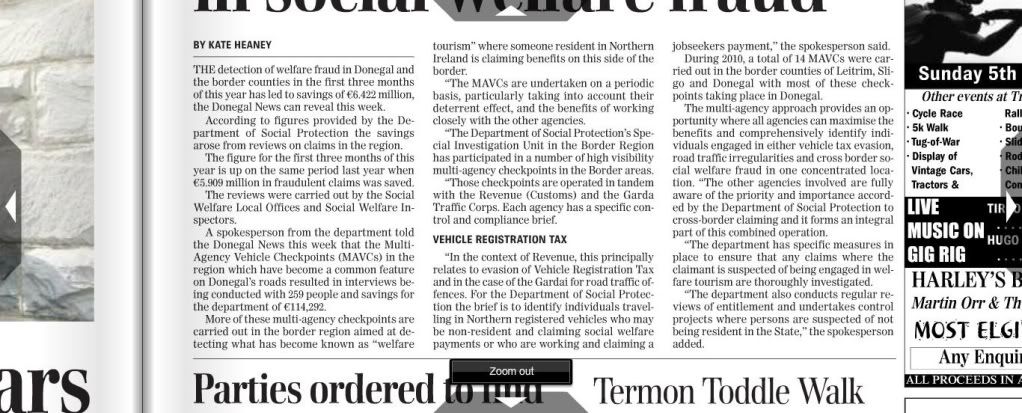
For example, a recent article in the Donegal News (June 2) entitled “Over €6 million detected in social welfare fraud” quotes the Department of Social Protection as saying that these 'savings' resulted from anti-fraud measures and reviews carried out by welfare offices and inspectors. Such newspaper articles and tv programmes such as the recent TV3 documentary and the RTE Prime Time programme in the run up to the Budget in 2009 when welfare cuts were to be first introduced are commonplace in highlighting this supposed widespread 'fraud'. 


There are a number of problems with assuming that all this, or even a significant amount of it, is fraud related. What the department, or the media, doesn't tell you is how many of these people will in all likelihood have their payment returned to them following appeal. In other words they don't tell you how many of them have had their payment stopped unfairly in the first place.

They don't tell you how this will impact on people who are already struggling to survive on pitiful social welfare rates. They don't tell you the hoops these people are forced to jump through and the lengthy delays they will endure to eventually get what they were entitled to all along.

Closer analysis of the Departments claims of fraud and fraud detection tell a very different story to the official narrative.

Over the past decade, of those who have had their welfare benefits withdrawn, cut or refused in the first place, every year between 40% and 50% of those who appeal that decision have those decisions overturned in their favour.

In other words, the fraud and deception taking place is that by those in government trying to portray these people as fraudsters when in fact it was the department of social protection defrauding those people entitled to their benefits. In 2003, the numbers of those who appealed that won their cases was 44%. By 2009 the numbers had risen steadily year in year out to 48%.

Successful Social Welfare Appeals 2003 – 2009 (%)

2009 - 48%

2008 - 47%

2007 - 47%

2006 - 46%

2005 - 47%

2004 - 46.5%

2003 - 44%

This is clear evidence of something fundamentally rotten with a system that year after year gets virtually 50% of such potentially life changing decisions wrong. Yet year after year the only 'reforms' we see implemented are those that make it harder for people in need of and entitled to benefits to secure those benefits.

Many of those who initially have their claims refused or cut do not appeal the decisions for a variety of reasons. In many instances people believe that having been refused that they are not entitled to their payment even though in reality they are.

Between 10 and 15% of those who appeal withdraw that appeal before it is heard. Not surprising considering social welfare appeals can take anywhere between six and twelve months to be heard.

For many people, their circumstances will have changed. For many others, it is the final straw. Fed up and in financial difficulties as a result of being unemployed yet being denied their entitlements many have opted for emigration, a situation that the department and the government as a whole wont lose any sleep over.

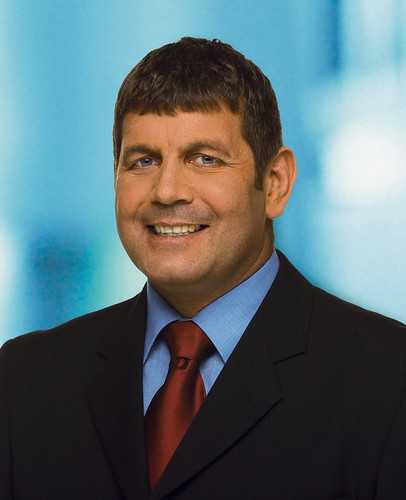
The reality is that the vast vast majority of people on social welfare would much prefer to have a job despite the best efforts of the political and media classes to suggest otherwise. During last weeks debate a Fine Gael TD Andrew Doyle said that the government needed to “give people an incentive to stop relying on social welfare.”

Fine Gael TD Andrew Doyle
 
The clear implication of that is that people are on welfare either by choice or due to lack of motivation or 'incentive' to find themselves a job. It is part of a pattern by the political and media classes to demonise those forced onto social welfare through no fault of their own, and to justify cutting welfare rates and benefits. It is also complete nonsense as there are no jobs out there for people to be “incentivised” to secure, as more than 460,000 unemployed people can attest to.

The statistics for employment growth and long term unemployment also expose the lies that the unemployed don't want to work or need to be pushed and cajoled into taking up employment. Throughout the 'celtic tiger' era, from the mid-nineties right through to 2007, employment grew annually here in the twenty six counties. At the same time long-term unemployment fell to very low levels and remained at those low levels right up until 2007.

More recently, throughout 2009 and 2010 growth in employment plummeted. As a result long term unemployment has soared to record highs in those years. What it reveals is that when there are jobs for people to take up, they will do so  No amount of 'incentives' or intimidation from the department can make people take up jobs that just do not exist.


High unemployment has nothing nothing to do with people being lazy and not wanting to work. It has to do with a lack of jobs. But should we be surprised at the successive governments and the media promoting this notion of 'laziness' and 'fraud'? Of course not. It suits them to put the blame for unemployment on those unfortunate enough to lose their jobs rather than those who are actually responsible for the job losses and unemployment crisis – the politicians themselves.

Before the recent general election, Fine Gael and Labour promised us all real change from the politics of Fianna Fáil who had held the reigns of power for more than a decade. Less than 100 days into office, it is crystal clear that the Fine Gael/Labour coalition are more than happy to jettison their pre-election promises.

They are proceeding along the same path as that of their predecessors in Fianna Fáil, bowing to their masters in the IMF and ECB, scapegoating and targeting low paid workers and social welfare recipients, while protecting the assets of the wealthy. The agenda remains the same. All that the general election has changed is the names and faces implementing it.

Friday, May 27, 2011

Resist the Latest Attacks on Workers Pay & Conditions


The Dublin governments enterprise minister Richard Bruton yesterday (May 26) issued a series of proposals designed to undermine the current system of Joint Labour Committees (JLC's), Employment Regulation Orders and Registered Employment Agreements (REA).  These are the structures which set basic rates of pay and conditions of employment across a variety of employment sectors.

Under Bruton's proposals, more than 200,000 workers could face further wage cuts and deterioration of their working conditions, particularly in the catering, hotels, security and hairdressing industries.


Minister for Enterprise Richard Bruton


Amongst his proposals are plans to cut overtime and end workers entitlement to Sunday premium payments that they currently are obliged to receive under the legally binding ERO's. He also plans to scrap half of the existing 13 joint labour committees and 'review' the remit of the remainder. Extremely worrying also for workers is the creation of a new procedure whereby agreement would no longer be necessary to change legally binding registered employment agreements.

Defending his plans, Bruton described them as “a fair and balanced set of proposals that would be in the interest of creating employment”.

Unsurprisingly, employers organisation IBEC welcomed these proposals but urged Bruton to go even further and abolish the JLC's completely. They too are pushing the line that the JLC's and ERO's are causing job losses and that cutting overtime, ending Sunday premium payments and abolishing these structures completely would actually create jobs.


According to Torlach Denihan of Retail Ireland (IBEC), the Retail JLC “is destroying jobs, is unnecessary because of the minimum wage and should be abolished.”

Not everyone agrees with IBEC or Minister Bruton's jobs claims. On Tuesday the government published the review it had commissioned on this whole area of JLC's. The authors of the report, Chairman of the Labour Court Kevin Duffy and UCD professor of economics Frank Walsh, made clear that abolition of this system will NOT create employment.

However, Brendan McGinty, IBEC's director of industrial relations, was more revealing in outlining the real motives in attempting to abolish the JLC's which has nothing to do with job creation.


IBEC's Brendan McGinty


Calling for the complete scrapping of the JLC system McGinty said: “These employers and workers (in the sectors covered by the JLC's) should be free to determine their own arrangements in the same way as the overwhelming majority of those in the private sector do.”


That is precisely why workers should be very worried about any attack on the JLC's. Let's be clear - the JLC's are no radical bodies acting on behalf of workers awarding them excessive rates of pay.


They are very basic structures designed to provide basic rates of pay and minimal conditions of employment for workers in extremely vulnerable sectors of employment. These are areas where trade union representation and collective bargaining are quite often non-existent.


When McGinty says he wants employers and workers to be free to sort their own arrangements like most in the private sector do, what he actually means is they want empoyers to be free to exploit their workers, to drive down wages and working conditions without any legal recall for their employees. They want their members to be free to intimidate, to bully, to hoodwink and to pit worker against worker in order to maximise their profits at workers expense.


One of IBEC's main arguments for abolition has been that employees rights are already covered by existing employment rights legislation. Once again however, this was dismissed by the authors of the government review who outlined quite clearly that primary legislation does not adequately cover matters currently dealt with by joint labour committees and registered employment agreements.

Even despite the presence of the JLC's and of the National Employment Rights Authority (NERA), an office of Minister Bruton's department whose mission statement claims that it “aims to secure compliance with employment rights legislation and to foster a culture of compliance in Ireland”, exploitation of workers is rife by McGinty's members within the private sector.


NERA's quarterly report for September 2010 (click here to read it) revealed that in the first nine months of last year, almost €600,000 in wages owed was recouped by workers following investigations by the authority of industry sectors governed by Employment Regulation Orders (EROs) or Registered Employment Agreements (REAs).


Last year also seen the highest ever numbers of cases being referred to the Labour Relations Commission (LRC). More than 15,000 complaints were made by individuals in 2010, an increase of more than 1,100 on the figures for 2009.


For anyone in any doubt the figures above are a compelling reason for workers to, at a minimum, maintain the protection and the rights afforded them through the JLC's and other legal mechanisms.


As éirígí have repeatedly pointed out, current legislation and its enforcement is inadequate. Employers have been forced to pay back money that they owed to their workers. However, the absence of fines in most instances or the miniscule fines when they are actually imposed coupled with the lack of prison sentences, means there is no effective deterrent for employers who break the law.


So rather than diminish and abolish JLC's and reduce the rights of workers, what is actually needed is that those already in existence need to be enhanced, enforced properly and punished severely when breached. A slap on the wrist and 'pay back what you owe' is not enough.  Employers who break these laws need to be going to jail for their crimes.


Condemning this latest attack on workers, éirígí Sligeach activist Gerry Casey described them as the the “thin end of the wedge”. He said that all trade unionists and workers must unite to resist what is “a serious attack on the living standards and working conditions of employees in already vulnerable sectors”.


Casey said: “These proposals to slash rates of pay and conditions have nothing to do with creating jobs as Bruton and the employers organisations would have us believe. This is part of a long term ideological strategy to drive down wages and diminish the rights of workers using the recession as their excuse. They are about creating even larger profits for employers and making it easier for them to exploit their employees.”


“They must not be allowed to succeed. If they do they will turn back the tide of all the hard won rights and entitlements that workers struggles have achieved over the past century, imperfect as they may be."


He added: “According to IBEC, Bruton should go further and abolish the JLC's altogether to bring the wage setting framework 'into the 21st century'. In reality, abolition of the JLC's, further restricting workers rights and scrapping premium payments would not be taking us into the 21st century as IBEC suggest, it would be taking us right back to the start of the 20th century.”


“All trade unionists and workers need to unite to defeat these proposals. Low paid workers have already suffered massive reductions in income in order to bail out the banks and pay off the private gambling debts of big business. There can be no compromise with these proposals.”


Sunday, August 15, 2010

Where are the promised Lisbon jobs Now?

IBEC posters promising jobs during second Lisbon Treaty Referendum Campaign
Do you remember seeing all these posters?  'Yes for Jobs', 'Yes for Jobs and Investment', 'Yes to Recovery' as well as a whole host of other literature bearing a similar message.  Remember all those politicians promising the moon and the stars (and particularly the jobs) in order to con people into voting for a treaty that they had already democratically rejected?

Well that was almost 12 months, so where exactly are all these jobs we were promised if the Lisbon Treaty was ratified?  Recently released figures from the Central Statistics Office (CSO) showed that,  contrary to those  promises of economic recovery and job creation,  unemployment levels in this state are at its highest in more than 16 years.  The numbers on the live register in July reached more than 466,000, an increase of 14,000 on June of this year and more than 34,000 higher than July of 2009.


The state wide figures are replicated here in the north west also.  There were 22,832 people on the Live Register in Donegal at the end of July, up 1,981 on the same period last year, a rise of 9.5%.  However, the jobless figure for Ballyshannon rose by a massive 15%, with Dungloe increasing by 13% and Letterkenny by 12%.  And in the latest blow to Donegal's unemployment problems, it was announced last week that the Keith Prowse call centre in Lisfannon, Buncrana, Co Donegal is set to close with the loss of up to 100 jobs.

In County Sligo, the unemployed numbers have risen by 166 from June and almost 500 from July 2009 to now stand at 5932.   In Leitrim those signing on has increased by 163 to total 3900, while County Roscommon's total is now 4,306 following yet another increase of 216 from last month and up 425 on July of last year.  County Mayo also seen an increase in those signing on with an extra 450 people joining the live register in July bringing the total to 13,965, and increase of more than 1200 on this time last year.

Despite the continued job losses and the fact that Fianna Fáil led administrations have succeeded in increasing unemployment levels from just 4.3% in July 2005 to the current level of 13.7% and rising in July 2010, Fianna Fáil Ministers have defended and attempted to justify the rising unemployment figures and their abject failure to save and create jobs.

According to Batt O'Keefe, Minister for Enterprise, Trade and Innovation, Fianna Fáil policies "are helping Ireland to emerge from recession and to avoid another period of protracted recession."

"We will persist with our policies" he said "to help unemployed workers to get back into the labour force and create conditions conducive to job creation".

Billboard in Donegal (December 2009)
Reacting to the latest unemployment figures and Fianna Fáil's response to them, éirígi activist Gerry Casey accused the government of "gross incompetence and mismanagement  of the economy".  He also claimed that the true figures for people losing their jobs is far higher than the figures suggest.

Casey said:  "At the time of the second Lisbon Treaty referendum campaign last year, Fianna Fáil backed up by the supposed opposition parties, Labour and Fine Gael as well as the representatives of big business such as IBEC and the American Chamber of Commerce in Ireland, promised us all that a vote for the Lisbon Treaty would secure jobs for Ireland.  As éirígí pointed out during the campaign, that was a blatant lie.  The continued loss of jobs around the state and the latest unemployment figures which now stands at a 16 year high of 466,000, exposes that lie clearly for all to see."

He added:  "However bad people may think those figures are, the reality is that the numbers losing their jobs is actually far higher.  What the figures don't show are those who are unemployed and have been forced to emigrate once more, egged on by a government happy to push them onto a boat or plane and get them off the live register.  Shamefully, forced emigration, a thing the Irish people thought was a thing of the past, has re-emerged with a vengeance as a direct result of this governments policies.  The statistics also hide those who are now on state schemes or remained in education due to a lack of employment."

"Fianna Fáil and the Greens have failed  miserably in tacking the jobs crisis and creating sustainable employment.  Their policy in terms of reducing the numbers of unemployed has been to cynically squeeze our young people who find themselves out of work to such a degree that they are forced to emigrate."

"On top of losing their jobs, young people had their dole reduced to €100 a week and €150 a week for under 21's and 22-24 year olds respectively, making it virtually impossible for them to survive on the dole in their own country.  Even at that, people signing on to receive this pittance are been forced to wait for as long as 16 weeks before being paid.  These measures were deliberately introduced by a callous government in order to make life unbearable for young unemployed people in the hope they would choose the option of emigration thus helping to hide the true extent of unemployment.”

FIanna Fáil, Fine Gael & Labour Unite in False Jobs Promises during Lisbon Treaty Referendum Campaign


"This administration, aided by the 'opposition' and big business, lied to the Irish people when they told us that ratifying the Lisbon Treaty would mean job creation and an end to the recession.  The 'opposition' who would offer themselves as an alternative deliberately lied to the Irish people also.  These parties, along with the neo-liberal capitalist system they strive to maintain, all share responsibility for the current economic crisis and the savage attacks being waged against working people and those less well off in society." 

Casey concluded:  "The solution to our social and economic problems is not replacing Tweedledum (Fianna Fáil/Greens) with Tweedledee (Fine Gael/Labour).  The solution lies in dismantling their rotten corrupt  capitalist system that continues to heap misery and hardship on working class communities and to replace it with an alternative Ireland based on public ownership and a decent standard of living and working conditions for all."