Showing posts with label poverty. Show all posts

Monday, June 13, 2011

Social Welfare – The Real Fraud

Below is the first in a series of articles relating to social welfare within the twenty six counties. Amongst the specific issues dealt with will be cutbacks, 'fraud' and the broken promises and hypocrisy of the Fine Gael/Labour coalition less than 100 days after taking office

A recurring (and generally unchallenged) theme that emanates from the political and media establishment is the notion of widespread social welfare 'fraud'.

If we were to take at face value the claims of politicians, employers groups, right wing economists, journalists and commentators, the cost to the state is colossal. If we were to believe them, there would have been no need for social welfare cutbacks in the first place if it wasn't for this 'fraud'.

Over the past week as the Social Welfare & Pensions Bill 2011 has been debated in Leinster House, speaker after speaker from the Fine Gael/Labour coalition made reference to this 'fraud'.

Minister for Social Protection Labour's Joan Burton (above)  said that “every euro saved on fraud is money that could be given to legitimate social welfare beneficiaries and to pensioners who need income support.”

While Fine Gael TD Patrick O Donovan was preparing the ground to justify another U-Turn by his party with more social welfare cuts by saying that “if the area of social welfare fraud was adequately tackled it would be possible to leave social welfare rates as they are.”

It is an appalling but clever tactic to avert the gaze of people from the true causes of the economic crisis and the savage cutbacks that are causing so much hardship and poverty. It is a long established deliberate attempt to paint an image in the public mind of every social welfare recipient as being somehow a 'sponger' that doesn't want to work or a downright 'fraudster'. This is then used to justify cutting social welfare rates, pushing people even further into poverty.


The media, as on so many other issues, are willing accomplices in keeping this narrative of 'widespread fraud' circulating while refusing to properly question or analyse the accuracy of the claims being made. But is there the widespread 'fraud' they suggest or is it a different kind of fraud and deception, one directed by the politicians in Leinster House and the Department of Social Protection itself?

For example, a recent article in the Donegal News (June 2) entitled “Over €6 million detected in social welfare fraud” quotes the Department of Social Protection as saying that these 'savings' resulted from anti-fraud measures and reviews carried out by welfare offices and inspectors. Such newspaper articles and tv programmes such as the recent TV3 documentary and the RTE Prime Time programme in the run up to the Budget in 2009 when welfare cuts were to be first introduced are commonplace in highlighting this supposed widespread 'fraud'. 
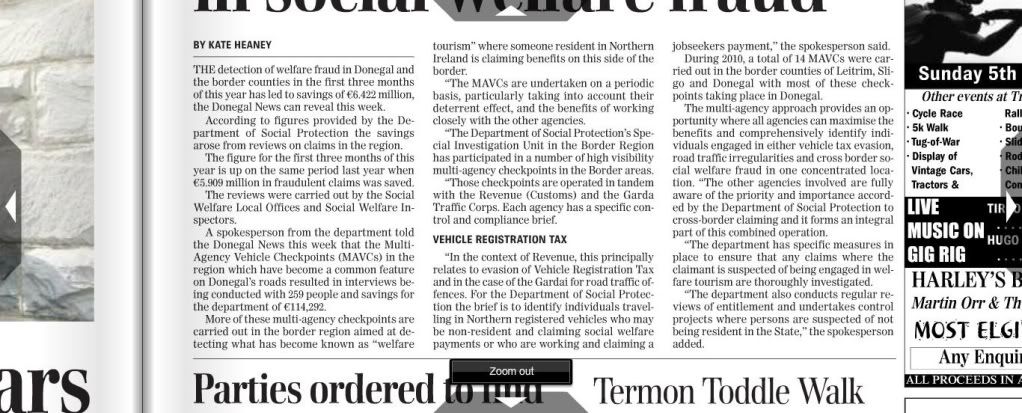

There are a number of problems with assuming that all this, or even a significant amount of it, is fraud related. What the department, or the media, doesn't tell you is how many of these people will in all likelihood have their payment returned to them following appeal. In other words they don't tell you how many of them have had their payment stopped unfairly in the first place.

They don't tell you how this will impact on people who are already struggling to survive on pitiful social welfare rates. They don't tell you the hoops these people are forced to jump through and the lengthy delays they will endure to eventually get what they were entitled to all along.

Closer analysis of the Departments claims of fraud and fraud detection tell a very different story to the official narrative.

Over the past decade, of those who have had their welfare benefits withdrawn, cut or refused in the first place, every year between 40% and 50% of those who appeal that decision have those decisions overturned in their favour.

In other words, the fraud and deception taking place is that by those in government trying to portray these people as fraudsters when in fact it was the department of social protection defrauding those people entitled to their benefits. In 2003, the numbers of those who appealed that won their cases was 44%. By 2009 the numbers had risen steadily year in year out to 48%.

Successful Social Welfare Appeals 2003 – 2009 (%)

2009 - 48%

2008 - 47%

2007 - 47%

2006 - 46%

2005 - 47%

2004 - 46.5%

2003 - 44%

This is clear evidence of something fundamentally rotten with a system that year after year gets virtually 50% of such potentially life changing decisions wrong. Yet year after year the only 'reforms' we see implemented are those that make it harder for people in need of and entitled to benefits to secure those benefits.

Many of those who initially have their claims refused or cut do not appeal the decisions for a variety of reasons. In many instances people believe that having been refused that they are not entitled to their payment even though in reality they are.

Between 10 and 15% of those who appeal withdraw that appeal before it is heard. Not surprising considering social welfare appeals can take anywhere between six and twelve months to be heard.

For many people, their circumstances will have changed. For many others, it is the final straw. Fed up and in financial difficulties as a result of being unemployed yet being denied their entitlements many have opted for emigration, a situation that the department and the government as a whole wont lose any sleep over.

The reality is that the vast vast majority of people on social welfare would much prefer to have a job despite the best efforts of the political and media classes to suggest otherwise. During last weeks debate a Fine Gael TD Andrew Doyle said that the government needed to “give people an incentive to stop relying on social welfare.”
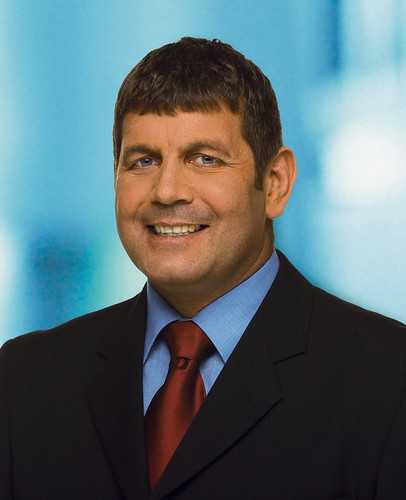
Fine Gael TD Andrew Doyle
 
The clear implication of that is that people are on welfare either by choice or due to lack of motivation or 'incentive' to find themselves a job. It is part of a pattern by the political and media classes to demonise those forced onto social welfare through no fault of their own, and to justify cutting welfare rates and benefits. It is also complete nonsense as there are no jobs out there for people to be “incentivised” to secure, as more than 460,000 unemployed people can attest to.

The statistics for employment growth and long term unemployment also expose the lies that the unemployed don't want to work or need to be pushed and cajoled into taking up employment. Throughout the 'celtic tiger' era, from the mid-nineties right through to 2007, employment grew annually here in the twenty six counties. At the same time long-term unemployment fell to very low levels and remained at those low levels right up until 2007.

More recently, throughout 2009 and 2010 growth in employment plummeted. As a result long term unemployment has soared to record highs in those years. What it reveals is that when there are jobs for people to take up, they will do so  No amount of 'incentives' or intimidation from the department can make people take up jobs that just do not exist.


High unemployment has nothing nothing to do with people being lazy and not wanting to work. It has to do with a lack of jobs. But should we be surprised at the successive governments and the media promoting this notion of 'laziness' and 'fraud'? Of course not. It suits them to put the blame for unemployment on those unfortunate enough to lose their jobs rather than those who are actually responsible for the job losses and unemployment crisis – the politicians themselves.

Before the recent general election, Fine Gael and Labour promised us all real change from the politics of Fianna Fáil who had held the reigns of power for more than a decade. Less than 100 days into office, it is crystal clear that the Fine Gael/Labour coalition are more than happy to jettison their pre-election promises.

They are proceeding along the same path as that of their predecessors in Fianna Fáil, bowing to their masters in the IMF and ECB, scapegoating and targeting low paid workers and social welfare recipients, while protecting the assets of the wealthy. The agenda remains the same. All that the general election has changed is the names and faces implementing it.

Friday, May 27, 2011

Resist the Latest Attacks on Workers Pay & Conditions


The Dublin governments enterprise minister Richard Bruton yesterday (May 26) issued a series of proposals designed to undermine the current system of Joint Labour Committees (JLC's), Employment Regulation Orders and Registered Employment Agreements (REA).  These are the structures which set basic rates of pay and conditions of employment across a variety of employment sectors.

Under Bruton's proposals, more than 200,000 workers could face further wage cuts and deterioration of their working conditions, particularly in the catering, hotels, security and hairdressing industries.


Minister for Enterprise Richard Bruton


Amongst his proposals are plans to cut overtime and end workers entitlement to Sunday premium payments that they currently are obliged to receive under the legally binding ERO's. He also plans to scrap half of the existing 13 joint labour committees and 'review' the remit of the remainder. Extremely worrying also for workers is the creation of a new procedure whereby agreement would no longer be necessary to change legally binding registered employment agreements.

Defending his plans, Bruton described them as “a fair and balanced set of proposals that would be in the interest of creating employment”.

Unsurprisingly, employers organisation IBEC welcomed these proposals but urged Bruton to go even further and abolish the JLC's completely. They too are pushing the line that the JLC's and ERO's are causing job losses and that cutting overtime, ending Sunday premium payments and abolishing these structures completely would actually create jobs.


According to Torlach Denihan of Retail Ireland (IBEC), the Retail JLC “is destroying jobs, is unnecessary because of the minimum wage and should be abolished.”

Not everyone agrees with IBEC or Minister Bruton's jobs claims. On Tuesday the government published the review it had commissioned on this whole area of JLC's. The authors of the report, Chairman of the Labour Court Kevin Duffy and UCD professor of economics Frank Walsh, made clear that abolition of this system will NOT create employment.

However, Brendan McGinty, IBEC's director of industrial relations, was more revealing in outlining the real motives in attempting to abolish the JLC's which has nothing to do with job creation.


IBEC's Brendan McGinty


Calling for the complete scrapping of the JLC system McGinty said: “These employers and workers (in the sectors covered by the JLC's) should be free to determine their own arrangements in the same way as the overwhelming majority of those in the private sector do.”


That is precisely why workers should be very worried about any attack on the JLC's. Let's be clear - the JLC's are no radical bodies acting on behalf of workers awarding them excessive rates of pay.


They are very basic structures designed to provide basic rates of pay and minimal conditions of employment for workers in extremely vulnerable sectors of employment. These are areas where trade union representation and collective bargaining are quite often non-existent.


When McGinty says he wants employers and workers to be free to sort their own arrangements like most in the private sector do, what he actually means is they want empoyers to be free to exploit their workers, to drive down wages and working conditions without any legal recall for their employees. They want their members to be free to intimidate, to bully, to hoodwink and to pit worker against worker in order to maximise their profits at workers expense.


One of IBEC's main arguments for abolition has been that employees rights are already covered by existing employment rights legislation. Once again however, this was dismissed by the authors of the government review who outlined quite clearly that primary legislation does not adequately cover matters currently dealt with by joint labour committees and registered employment agreements.

Even despite the presence of the JLC's and of the National Employment Rights Authority (NERA), an office of Minister Bruton's department whose mission statement claims that it “aims to secure compliance with employment rights legislation and to foster a culture of compliance in Ireland”, exploitation of workers is rife by McGinty's members within the private sector.


NERA's quarterly report for September 2010 (click here to read it) revealed that in the first nine months of last year, almost €600,000 in wages owed was recouped by workers following investigations by the authority of industry sectors governed by Employment Regulation Orders (EROs) or Registered Employment Agreements (REAs).


Last year also seen the highest ever numbers of cases being referred to the Labour Relations Commission (LRC). More than 15,000 complaints were made by individuals in 2010, an increase of more than 1,100 on the figures for 2009.


For anyone in any doubt the figures above are a compelling reason for workers to, at a minimum, maintain the protection and the rights afforded them through the JLC's and other legal mechanisms.


As éirígí have repeatedly pointed out, current legislation and its enforcement is inadequate. Employers have been forced to pay back money that they owed to their workers. However, the absence of fines in most instances or the miniscule fines when they are actually imposed coupled with the lack of prison sentences, means there is no effective deterrent for employers who break the law.


So rather than diminish and abolish JLC's and reduce the rights of workers, what is actually needed is that those already in existence need to be enhanced, enforced properly and punished severely when breached. A slap on the wrist and 'pay back what you owe' is not enough.  Employers who break these laws need to be going to jail for their crimes.


Condemning this latest attack on workers, éirígí Sligeach activist Gerry Casey described them as the the “thin end of the wedge”. He said that all trade unionists and workers must unite to resist what is “a serious attack on the living standards and working conditions of employees in already vulnerable sectors”.


Casey said: “These proposals to slash rates of pay and conditions have nothing to do with creating jobs as Bruton and the employers organisations would have us believe. This is part of a long term ideological strategy to drive down wages and diminish the rights of workers using the recession as their excuse. They are about creating even larger profits for employers and making it easier for them to exploit their employees.”


“They must not be allowed to succeed. If they do they will turn back the tide of all the hard won rights and entitlements that workers struggles have achieved over the past century, imperfect as they may be."


He added: “According to IBEC, Bruton should go further and abolish the JLC's altogether to bring the wage setting framework 'into the 21st century'. In reality, abolition of the JLC's, further restricting workers rights and scrapping premium payments would not be taking us into the 21st century as IBEC suggest, it would be taking us right back to the start of the 20th century.”


“All trade unionists and workers need to unite to defeat these proposals. Low paid workers have already suffered massive reductions in income in order to bail out the banks and pay off the private gambling debts of big business. There can be no compromise with these proposals.”


Friday, May 13, 2011

éirígí Interviews on Ocean FM Radio re Windsor Visit

Below are audio clips of interviews carried on Ocean Fm radio in relation to the upcoming state visit by the Commander in chief of the British army and so-called 'British Queen' Elizabeth Windsor.

The first is éirígí Sligeach activist Gerry Casey being interviewed this morning (Fri May 13) on Ocean FM's North West Today Current Affairs Programme about éirígí's planned protests against the visit.

The second is a very brief interview (sound bite) by Gerry Casey which was carried on Ocean FM news yesterday (Thurs May 12)


Monday, March 21, 2011

Sinn Féin called on to re-think Opposition to Anti-Royal Protests

The socialist republican party éirígí have called on Sinn Féin to re-think their publicly stated opposition to protests against the forthcoming visit by the English Monarch Elizabeth Windsor.


Their call comes in the wake of recent comments carried in various national and local media outlets by newly elected Sinn Féin TD for Sligo/North Leitrim, Michael Colreavy, in which he called for “no protests” against the visit.  Deputy First Minister of Britain's puppet parliament at Stormont, Sinn Féin's Martin McGuinness made similar public statements in recent days.


Responding to Deputy Colreavy's remarks éirígí Sligeach activist Gerry Casey said: “The decision by Sinn Féin to publicly call on people not to protest about the upcoming visit by the British Head of State and Commander in Chief of the British army defies all logic."


“The purpose of this visit is an attempt to legitimise and normalise the continued occupation of the six counties by her government and thousands of her troops. It is a further attempt to copper-fasten partition and continue to deny the right of self-determination to the Irish people as a whole.”


Casey added: “This woman and the sectarian institution that she represents is an apologist for illegal military occupations and war crimes carried out by her troops, not just in Ireland but in Iraq and Afghanistan also."


“She believes that she and her family have a god-given right to rule and live a life of luxury funded by the labour of working people whom she considers her ‘subjects’.  Everyone that considers themselves a republican, a socialist and a democrat should, not only be appalled at the prospect of this visit, but should be actively protesting and organising resistance to it.”


He continued: “Our position is clear - it is that of James Connolly and of Bobby Sands. Britain has no right to occupy the six counties or any part of Ireland.  Until there is a complete British military and political withdrawal from our country it must be consistently and vociferously challenged. 


“There cannot and will not be any ‘normalisation’ of British – Irish relations. As such, this and future British state visits will be met with vigorous opposition.”


Casey concluded: “I would urge Deputy Colreavy to urgently re-examine the stance he and the leaders of his party have taken; a stance clearly at odds with the views of his own party’s grassroots members in this region.  It is not too late for them to do the right thing and to join the growing opposition and resistance to this visit.”

Friday, January 21, 2011

Resistance to Shell Pipeline in Mayo set to Continue

Despite the decision by An Bord Pleanala yesterday (Jan 20) to grant permission to Shell to proceed with laying their onshore pipeline in north Mayo, campaigners against the plan have vowed to step up resistance in the weeks and months ahead.

This latest application by Shell, which follows two previous applications which were rejected on safety grounds, will see them construct a high pressure pipeline to carry raw unrefined gas from the landfall site at Glengad through Pollathomais, Aughoose and Leenamore to their refinery at Bellanaboy. Shell's application for a foreshore licence to construct a tunnel through Sruwaddacon estuary is still awaiting a decision by Green Party Minister John Gormley.


Reacting to the decision, Terence Conway who is a spokesperson for the Shell to Sea campaign group said it came as no surprise since An Bord Pleanala had moved from being adjudicators of this project into co-designers of it. He also flatly rejected their claims that the people of Mayo and Ireland would benefit from this decision.

Mr Conway said: “An Bord Pleanala commented in their report that this decision would benefit the people of Mayo and Ireland. However, the only people to benefit from this decision will be the shareholders of Shell, Statoil and Vermillion. The Government’s own estimates are that there is at least €600 billion worth of oil and gas off Ireland’s coast, but it seems hell-bent on ensuring none of the benefits go the Irish people.”

He added: “An Bord Pleanala recommends that Shell create an €8.5 million community fund. The board still seems to to think our community can be bribed into accepting a project that places us in danger. This bribery fund would also be fully tax deductible for Shell under Ireland’s current oil and gas exploration licensing terms.”


In conclusion Mr Conway pledged a continuance of protests against the plan. "In November 2009” he said “An Bord Pleanala turned from adjudicator into co-designers of this project, so it's no surprise they approved the suggestion they made to Shell. Of course protests will continue and given the current economic situation we see our support growing everyday”

According to the environmental protection group An Taisce, the decision to grant permission was “fundamentally legally flawed”. They said it was totally contrary to EU law and completely ignored the legislative requirements of the EU Habitats, Birds and Environmental Impact Assessment directives.

Also reacting to the decision was éirígí Sligeach activist Gerry Casey who said that the twenty six county governments stubborn insistence on giving away to Shell hundreds of billions of euros worth of natural resources amounted to economic treason.


Casey said: “We are currently in the midst of probably the worst economic crisis ever endured by the Irish people. What passes for government in Leinster House have set about slashing the living standards of working class people. They have cut child benefit, social welfare and wages including the minimum wage, imposed new taxes and levies, increased the cost of fuels including electricity and slashed budgets for public hospitals and schools.”

“The lie repeated by Fianna Fáil and the Greens is that there is no option but to impose savage cutbacks that have resulted in widespread poverty, mass unemployment and the emigration of thousands of our brightest young people, the very people that should be the future of this island.”

He added: “Despite all this, the coalition insist on pressing ahead with giving away to Shell, and other large multinationals, the right to exploit our natural resources. The vast wealth located under the seabed off our shores could help eradicate poverty, make any excuse for cutbacks redundant and would ensure that essential public services such as health and education could receive proper investement enabling the creation of the first class public services that people deserve. It would also enable investment in creating long term sustainable employment, to cut the dole queues and reverse the flow of emigration from our shores.”


“The only people to benefit from this latest decision by An Bord Pleanala to allow this experimental pipeline to proceed, despite the obvious dangers it poses to the environment and the local community, will be the shareholders of Shell. It also condemns the people of the Erris peninsula to continued suffering under the reign of terror imposed on them by Shell and the state for the forseeable future.”

Casey concluded: “This is economic treason and must be resisted at all costs. For our part éirígí will continue to support the people of north Mayo in their struggle to prevent this monstrosity being imposed upon them without their consent. We will also continue to highlight the need to send Shell packing and take back our natural resources, refine the gas at sea and use the wealth produced for the public good and not to line the pockets of the shareholders of multinational companies.”


Monday, September 20, 2010

Protest against Cutbacks as Cowen visits Sligo


More than 120 people took part in a demonstration on Friday night outside the Clarion hotel in Sligo. The occasion was the annual dinner of Sligo Chamber at which the guest of honour was Brian Cowen.


The demonstration had been called and organised by two local campaign groups. The Save Sligo's Cancer Services were protesting at the removal of Breast Cancer services from Sligo General Hospital to Galway last year and the ongoing cutbacks at Sligo General hospital.

The Sligo Workers Alliance (SWA) also held a protest opposing the savage cutbacks imposed on essential public services, including cutbacks at Sligo General hospital, as well cuts in workers pay and social welfare payments.

According to Brian O'Boyle, spokesperson for the SWA, they were there to highlight the fact that the people who had caused the economic crisis were still in charge and forcing the less well off to carry the burden. 


Despite requests from a variety of local community organisations who had sought a meeting with Cowen, all those requests were denied. Instead, the only engagements he took part in was a meeting with the Sligo Champion, one of the many newspapers owned by Tony O'Reilly's media empire, who are launching their newpaper in new tabloid format and his attendance at the Sligo Chamber's 5-star tuxedo dinner where Cowen wined and dined with business elite of Sligo.

Amongst those taking part in the protest was local éirígí activist Gerry Casey.

Speaking following the protest Casey said: “The fact that Cowen refused to meet with local community groups effected by the cutbacks imposed by his administration, yet was more than happy to help promote one of Tony O'Reilly's newspapers and attend a lavish banquet with the wealthy business elite of Sligo, shows exactly where his priorities lie.”

He added: “Cowen and his cronies care nothing for the suffering of local working class communities who he is forcing to pay for the economic crisis brought about by his policies and that of his administration. His only concern is with protecting the interests of the wealthy political and business elite and maintaining their lavish and extravagant lifestyles. The presence of so many 2010 Mercedes' at the Chamber dinner shows Cowen has done a fine job in protecting that wealth”


“On the other hand low paid workers and welfare recipients have already suffered immense hardship due to the extent of the savage cutbacks imposed over the past two years. They have suffered cuts in pay, welfare, child benefit, early childcare supplement, home help, school transport, school book schemes, the scrapping of the Christmas bonus and new prescription charges, all of which have had a hugely negative impact on their standard of living.”

He continued “Added to this is the impact that the carbon tax, subsequent increased fuel costs and the imminent ESB price hike has had on these families and which has lead to a sharp decline in the living standards of working people and has created widespread poverty. As we approach winter, the reality is that fuel poverty is set to increase dramatically and will ultimately result in more preventable illness and deaths, placing an even heavier burden on an already overburdened public health system that has been stripped to the bone and has suffered widespread slashing of essential services.”


“As éirígí have repeatedly pointed out, none of these cutbacks are based on economic necessity. This administration has pumped tens of billions of euros into bailing out the banks at the same time as they deliberately slash essential health and education services and drive increasing numbers of families into extreme poverty.”

Casey concluded: “This is a fight that working class communities cannot afford to lose. Its long past time for these communities the length and breadth of this state to come together and organise effectively to drive these self serving politicians from power. More importantly however we need to dismantle and destroy their capitalist system which is based on greed before need and is responsible for the continued and increasing exploitation of workers, the ongoing drive to slash and privatise hospital services and the neglect of the most vulnerable in society who need assistance and care."

Thursday, August 12, 2010

éirígí claims Electricity Price Hike will lead to increased Fuel Poverty

The decision by the Minister for Energy Eamonn Ryan to give the go-ahead for a 5% increase in the price of electricity has been slammed by éirígí Sligeach's Gerry Casey who said it will cause increased fuel poverty and further hardship for the most vulnerable in society.

Minister Eamon Ryan

Casey was speaking following the unveiling last week of the Dublin governments plans to impose this price hike through a new public service obligation (PSO) levy which will come into force in October of this year.

Also critical of the new levy was Gerard Scully, spokesperson for Age Action who echoed éirígí's concerns over increased fuel poverty.  According to Scully "older people, because they are more fuel dependent than other groups in society, spend a high proportion of their income on fuel and energy."

He added:  "So any increase in either domestic heating fuel or electricity will mean those older people surviving on State pensions will find it increasingly difficult to maintain themselves with any sense of security or dignity.”


If people are in any doubt about the inevitably of increased fuel poverty, illness and death, one only needs to look at statistics compiled before the current recession took hold.  During the so-called boom of the Celtic Tiger, the Central Statistics Office (CSO) revealed how in 2008 more than 4% of people, a third of whom were children, lived in consistent poverty while almost 15% were at severe risk of poverty.

The Institute of Public Health in Ireland also revealed in research published in 2007, showed that almost 3000 people died every single year from preventable cold - related illnesses.  This, once again, is during the supposed economic 'boom' and well before the current recession.

Fast forward to last year 2009, and prior to that year's budget, St Vincent De Paul revealed how two thirds of welfare recipients already needed assistance to pay their fuel bills. They warned the government that any increased cuts in income or fuel costs  would increase hardship and poverty and see many people going without food and other necessities.

Their warnings were ignored by the ruling Fianna Fáil and Green party coalition who proceeded to slash the incomes of those already in poverty or at risk of poverty and increased fuel costs.  As unemployment continues to rise, income levels drop and fuel costs increase, it is quite clear that the numbers living in poverty, struggling to keep a roof over their head, put food on their table and heat their homes adequately, has increased rapidly and continues to do so as these cutbacks hit home.


Cold related illnesses and deaths were unacceptably high during the 'boom' years.  Now as incomes drop significantly and poverty levels increase rapidly so too will the numbers falling ill and even dying as a result. 

Here in the northwest, St Vincent De Paul (SVP) has already seen a 40% rise in calls for assistance to them in the first five months of this year.  One in four of those contacting the SVP are what the society describe as "newly in need", people who have never had to contact them for assistance in the past.  This is clear evidence once again of the extent of the poverty being created by the  deliberate policies of Fianna Fáil and the Green party.

Slamming the decision to impose this latest levy, Casey said:  "Once again it is the poorest in society, the unemployed, pensioners, the ill and low paid workers, who will be hit hardest by this new 'tax''.  It will cause untold hardship and suffering to families and individuals who are already suffering as a result of savage cuts in pay and social welfare imposed by a callous and uncaring government.  It will drive more and more families into poverty and particularly fuel poverty."

Casey added:  "Low paid workers and welfare recipients have already suffered immense hardship due to the extent of the savage cutbacks imposed over the past two years.  They have suffered cuts in their pay, in social welfare, child benefit, early childcare supplement, home help, school transport, and school book schemes, the scrapping of the Christmas bonus, and new prescription charges,  all of which have had a hugely negative impact on their standard of living.  Added to this is the impact that the carbon tax and subsequent increased fuel costs have had on those same families, which has lead to a sharp decline in the living standards of working people and has increased poverty."

"Once more it is the poorest and most vulnerable in our society who will be hit hardest by this new tax.  Just as with the Carbon Tax, what this new fuel hike will mean is that people who are living in poverty  and struggling to make ends meet already will end up using less fuel to heat their homes.  The end result of this is increased fuel poverty and the inevitable  increase in cold related illnesses and deaths."


"Yet again, what passes for a government in Leinster House  show they care nothing about the misery and suffering they are inflicting on increasing numbers of working class families.  Their only concern is with protecting the interests of their banking and developer cronies and maintaining the lavish lifestyles of the wealthy political and business elite." 

Casey concluded:  "Its long past time for working class communities the length and breadth of this state to come together and organise  effectively to drive these self serving politicians from power.  More importantly  however we need to dismantle and destroy their capitalist system which is based on greed before need and is responsible for the continued and increasing exploitation of workers, the ongoing drive to slash and privatise hospital services and the neglect of the most vulnerable in society who need assistance and care."

Thursday, August 5, 2010

Unnecessary Health Cuts & the Give-away of our Natural Resources


Opinion piece by éirígí's spokesperson in Donegal Micheál Cholm MacGiolla Easbuig.  This article was carried in yesterdays Tir Chonaill newspaper (Aug 4th 2010)

In recent weeks, the Fianna Fáil/Green party coalition have been flagging up yet further cutbacks they plan to introduce in the upcoming budget. This follows a series of the most savage budget cutbacks imposed since the foundation of the 26 county state.

This administration's policies has decimated the economy, created mass unemployment (22,000 + in Donegal alone), driven thousands of families into poverty, forced tens of thousands of young people to emigrate once more and systematically stripped down our hospitals and health services to crisis point.

Letterkenny General Hospital


Not content to see tens of thousands of people lose their jobs, the government heaped further misery on already struggling familes by slashing their social welfare, cutting child benefit, ending the Chrismas bonus, introducing the carbon Tax and increasing fuel costs. All this has led to a sharp decline in people's living standards and has caused increased poverty.

Institute of Public Health in Ireland research published in 2007 claimed that fuel poverty directly effects people’s health. According to the Report, every year during the winter months, almost 3,000 people die due to preventable, cold-related illness.

Figures from the Central Statistics Office show that, in 2008, more than four per cent of people were living in consistent poverty, with almost 15 per cent at risk of poverty. Almost a third of those living in consistent poverty were children. All those figures will have risen dramatically over the past two years as unemployment soared and wages and welfare were cut.

In recent weeks we have seen HSE proposals to slash services even further at Letterkenny General Hospital and elsewhere throughout the state. Smaller hospitals such as Lifford's community hospital and the Sheil Hospital in Ballyshannon face closure also. Such cuts, if the government get their way, will mean severe reductions in essential services, longer waiting lists, increased workloads for already overburdened front line hospital staff and increased suffering and even deaths for patients who will not get the medical care and assistance they need when they need it.

However, if that was not bad enough, the HSE's political masters are now intent in forcing through even more severe cutbacks in the upcoming budget. They are planning to slash the Health, Education and Social Welfare Budgets by €1.1 billion, €700 million of that from an already underfunded, understaffed and under-resourced health service.


Fianna Fáil say these cuts are necessary but the reality is the opposite. There is no excuse for cutting funding and services for hospitals. It is a deliberate political decision and strategy based on Fianna Fáil's and the now-defunct PD's right wing privatisation ideology.

When it comes to throwing tens of billions of euros to bail out the banks or €8 million to bring the Commander in Chief of the British army Elizabeth Windsor to this state next year Fianna Fáil and the Greens have no problem. Yet ask them to invest in our hospitals and and they tell us the money is not there.

But the money is there, only they believe bailing out banks is more important than our health. This remains a wealthy state, however the wealth is controlled by a small minority. As workers and those on welfare have seen their incomes slashed, the rich in this state have become even richer. Yet the administration in Leinster House refuses to introduce a wealth tax and refuses to nationalise our natural resources which would bring in hundreds of billions of euros that could be used to create a first class health service for all.

Under the seabed off the coast of Mayo, Sligo and Donegal lies oil and gas that rightfully belong to the Irish people. These valuable resources are worth at least €500 billion and in all likelihood far in excess of that. Yet, in one of the most shameful decisions ever made, Fianna Fáil signed away the rights to this vast wealth to private multinational oil giants like Shell, who have an appalling environmental and human rights record around the world.


But it is not too late to do something about this – all that is lacking is the political will. This wealth, could and should be used to reverse the savage welfare and pay cuts and to create jobs and stem the flow of young people emigrating. It should be used to eradicate the shameful blight of poverty that continues to increase. It should be used to, not just reverse the cuts at Letterkenny General Hospital and elsewhere, but to invest in creating efficient health and education services accessible and available to all based on need, as opposed to a person's wealth.

In short, it should be used to create a fairer society, one that cherishes all the children of the nation equally in line with the 1916 proclamation, with a better standard of living for all. So the next time you hear a Fianna Fáil politician telling you how these cuts are unavoidable and how hard decisions have to be made, dont hesitate in telling them that the decisions they need to make are to tax the wealthy, nationalise our natural resources and to fund our hospitals, not the banks. Your health is more important than keeping the wealthy political and business elite living in the luxurious lifestyles they are accustomed to.